

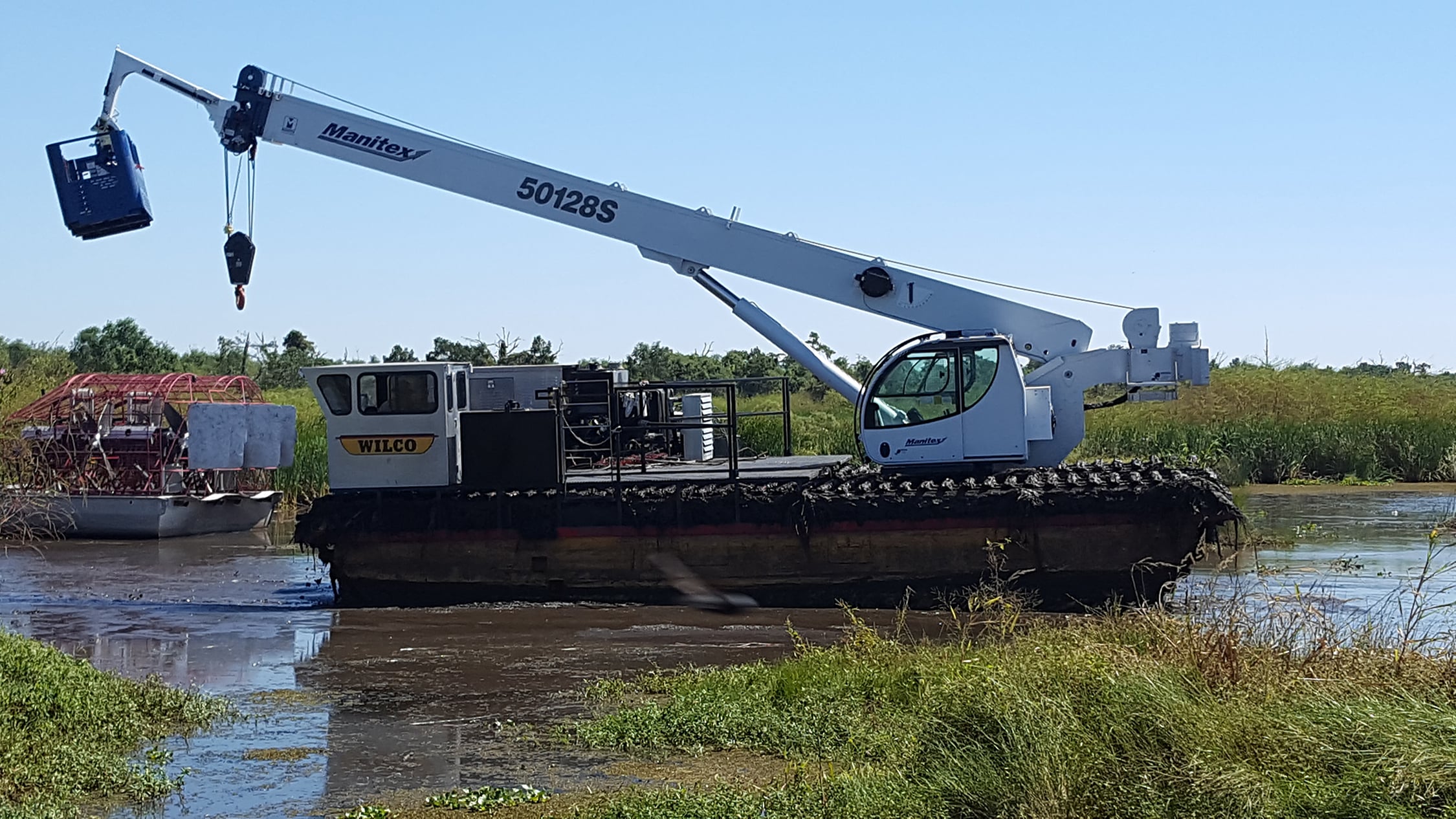
Working in marshland environments is one of the most complex challenges in heavy construction and dredging projects. Unlike stable ground conditions, wetlands have soft soil, high water content, and unpredictable load-bearing capacity. These factors make lift radius constraints a major operational limitation for cranes and lifting equipment. Wilco Marsh Buggies specialize in designing amphibious solutions that help overcome these extreme terrain challenges.
In such conditions, even advanced machines struggle because extending the boom increases instability, and the ground itself cannot support shifting loads safely.
Understanding Lift Radius Constraints in Marsh Operations
Lift radius refers to the horizontal distance between a machine’s center of rotation and the load being lifted. In marshlands, this becomes a critical safety factor because the ground cannot provide consistent resistance.
As the boom extends, weight distribution shifts outward, increasing the risk of tipping or sinking. This is why equipment used in wetland projects must be specially designed to handle unstable terrain while maintaining balance under extended reach conditions.
Conventional lifting systems lose efficiency quickly in such environments, forcing operators to reduce load capacity significantly.
Why Marshlands Are So Challenging for Lifting Equipment
Wetland environments behave like semi-fluid surfaces. The soil is often saturated with water, reducing its shear strength and making it unstable under pressure.
One of the biggest issues is soil saturation, where peat, clay, and organic matter compress easily under load. This directly affects how far a machine can safely extend its lift radius.
Another challenge is subsurface inconsistency. Hidden water pockets and soft sediment layers can cause sudden ground shifts during lifting operations, making stability unpredictable.
These conditions make standard lifting charts unreliable without specialized amphibious support systems such as marsh cranes, which are specifically designed to maintain stability and lifting performance in soft, waterlogged terrain.
Amphibious Solutions for Lift Radius Challenges
The most effective way to overcome lift radius limitations in marshlands is through amphibious machinery, which is designed specifically for low-bearing environments.
These systems rely on flotation-based structures and wide load distribution to maintain stability even in waterlogged terrain. Instead of depending on rigid ground support, they use buoyancy to balance lifting forces.
A key advancement in this area is the development of specialized lifting systems like Marsh Cranes, which are engineered specifically for heavy-duty lifting in swamp and wetland conditions. These machines allow controlled lifting even at extended reach where traditional cranes would fail.
Their pontoon-based design ensures stability even during full boom extension, making them essential for dredging, pipeline installation, and environmental restoration projects.
Role of Marsh Buggies in Extending Operational Reach
One of the most practical solutions to lift radius constraints is reducing the distance between machine and load. This is where a marsh buggy becomes essential.
A marsh buggy acts as a mobile amphibious platform that allows equipment to move closer to the work zone without sinking or losing balance. Instead of extending the boom to reach distant loads, operators can reposition the entire machine safely.
This reduces stress on the lifting system and significantly improves operational safety in unstable terrain conditions.
Engineering Strategy to Reduce Lift Radius Stress
Even with amphibious equipment, operators follow strategic methods to manage lift radius limitations.
One common approach is repositioning equipment instead of maximizing boom extension. This reduces leverage stress and improves stability.
Another important method is load segmentation, where heavy materials are divided into smaller sections before lifting. This ensures safer handling even when working at extended reach.
Hydraulic stabilization systems also help by automatically adjusting balance during lifting, reducing the impact of shifting terrain conditions.
Applications in Dredging and Wetland Projects
Lift radius constraints are especially important in dredging and environmental restoration projects. These include canal widening, sediment removal, and shoreline rehabilitation.
Amphibious equipment allows operators to work in areas that are otherwise inaccessible. Marsh buggies provide transport across soft terrain, while amphibious cranes handle lifting and excavation tasks in shallow water zones.
This combination makes large-scale wetland infrastructure projects possible without damaging sensitive ecosystems.
Future of Amphibious Lifting Technology
The future of wetland lifting is moving toward smarter and more adaptive systems. Innovations such as automated load balancing, intelligent flotation control, and hybrid amphibious power systems are improving safety and efficiency.
Manufacturers like Wilco Marsh Buggies are continuously advancing these technologies to handle more extreme conditions while reducing operational risk.
For project assistance, technical consultation, or equipment inquiries, you can connect directly through the Contact Wilco.
Conclusion
Lift radius constraints in marshland environments are not just a mechanical limitation—they are a direct result of unstable and water-saturated terrain conditions. Traditional cranes struggle because they rely on firm ground support, which wetlands do not provide.
Amphibious systems like marsh buggies and specialized marsh cranes solve this problem by shifting stability from ground dependence to flotation-based engineering. By improving mobility and reducing effective lift radius requirements, these systems make safe lifting possible even in the most challenging marsh environments.
Frequently Asked Questions
1. What are lift radius constraints?
Lift radius constraints are limitations on how far equipment can safely lift and move loads while maintaining stability.
2. Why do marshlands affect lifting operations?
Marshlands have soft, waterlogged ground that reduces stability and limits the safe operating range of lifting equipment.
3. How do marsh buggies help in wetland projects?
Marsh buggies provide mobility and stability across soft terrain, allowing equipment to access difficult areas safely.
4. What are marsh cranes designed for?
Marsh cranes are built to perform lifting operations in wetlands, swamps, and other challenging low-ground-pressure environments.
5. What projects require amphibious lifting equipment?
Common applications include dredging, pipeline installation, utility work, shoreline restoration, and environmental remediation projects.