

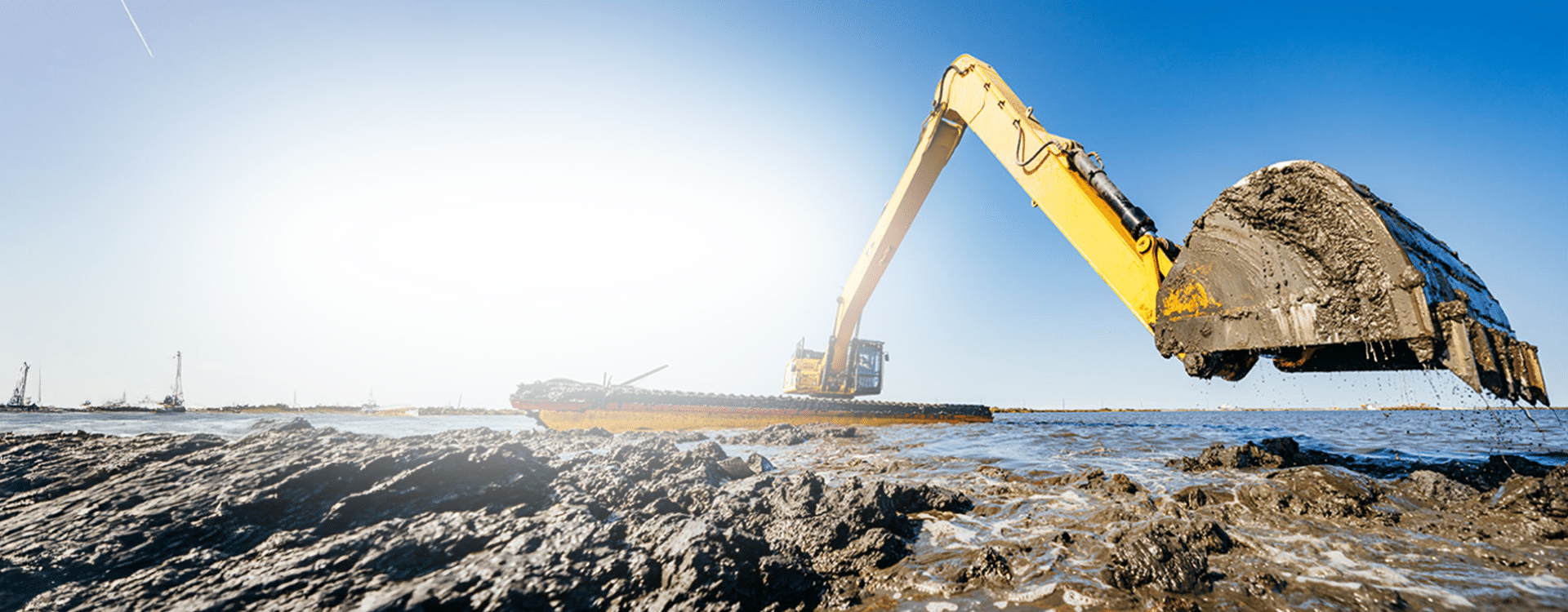
Construction and land management projects near lakes, rivers, wetlands, and coastal areas often raise the same question: can a regular excavator work in water, or is specialized equipment required? The short answer is that standard excavators are not designed for water or soft ground, while a purpose-built water excavator can operate safely and effectively in these conditions.
This article looks at how a regular excavator performs near or in water, what makes an amphibious excavator different, and which projects call for each type of machine.
How a Regular Excavator Performs Near Water
A standard excavator is built for solid ground. Its steel tracks and undercarriage are designed to grip firm soil, gravel, or rock. When that same machine is placed on saturated ground, mud, or shallow water, several problems appear quickly.
Limited Ground Support
Wet and marshy ground cannot support the weight of a conventional excavator. The machine sinks, tracks lose traction, and operators risk the equipment tipping or becoming stuck. Even a partially submerged track can compromise stability.
Water Damage to Components
Standard excavators are not sealed for submersion. Engines, hydraulic systems, and electrical components can be damaged if water reaches critical parts. Prolonged exposure to water and silt accelerates wear on seals, bearings, and undercarriage parts that were never built for that environment.
Safety Concerns
Operating a conventional machine on unstable, waterlogged ground increases the risk of rollover. This is a safety hazard for the operator and anyone working nearby, and it can also damage the surrounding site.
For these reasons, contractors generally avoid sending a regular excavator into standing water or soft wetland soil. Instead, they turn to equipment purpose-built for these conditions.
What Is an Amphibious Excavator?
An amphibious excavator is a machine modified with a specialized pontoon undercarriage that allows it to float and move across water, mud, and soft terrain. Unlike a standard excavator, it does not rely on steel tracks alone for support. The pontoons distribute weight over a much larger surface area, which keeps the machine stable in conditions that would sink conventional equipment.
This category of equipment is known by several names depending on the industry and region, including swamp excavator, marsh excavator, and amphibious undercarriage excavator. All of these terms describe the same basic concept: an excavator adapted to work reliably in wet, low-bearing-capacity environments.
When choosing the right amphibious excavator, it is important to consider factors such as water depth, ground conditions, required reach, lifting capacity, and the type of work being performed.
Key Features of an Amphibious Excavator
- Pontoon-style undercarriage for flotation and low ground pressure
- Sealed components rated for water and mud exposure
- Wide track spread for stability on soft or uneven ground
- Compatibility with long-reach attachments for extended dredging or clearing work
Amphibious Excavator vs Regular Excavator: Side-by-Side Comparison
| Feature | Regular Excavator | Amphibious Excavator |
|---|---|---|
| Undercarriage | Steel Tracks | Pontoon Undercarriage |
| Ground Pressure | High, sinks in soft ground | Low, distributes weight over pontoons |
| Water Tolerance | Not designed for submersion | Sealed for water and mud exposure |
| Typical Terrain | Firm soil, gravel, rock | Wetlands, swamps, marshes, shallow water |
| Stability on Soft Ground | Limited, risk of tipping | Higher, built for unstable surfaces |
| Common Use Cases | General excavation, grading, demolition | Dredging, wetland restoration, canal maintenance |
| Reach Options | Standard boom configurations | Often paired with amphibious long-reach excavator setups |
When Is an Amphibious Excavator Needed?
Not every wet site requires an amphibious machine. The decision usually comes down to ground conditions, water depth, and the type of work involved.
Wetland and Marsh Projects
Wetland restoration, vegetation clearing, and habitat management often take place on ground that cannot support conventional equipment. A marsh excavator is designed to move across this terrain without causing excessive rutting or sinking.
Dredging and Canal Maintenance
Canals, drainage ditches, and shallow waterways frequently need sediment removal to maintain flow. An underwater excavator setup, paired with the right attachment, can reach into the water and remove built-up material without needing to drain the area first.
Pipeline and Utility Work in Wet Areas
Utility and pipeline projects that cross marshland or floodplain areas often require equipment that can operate directly in the wet right-of-way. Amphibious undercarriage excavators reduce the need for extensive matting or temporary access roads.
Long Reach Applications
Some projects require extended boom length to reach across wide canals or deep water areas. An amphibious long-reach excavator combines the flotation benefits of a pontoon undercarriage with a boom configuration built for greater working distance.
Choosing the Right Water Excavator for a Project
Selecting equipment for a wet site depends on several factors that should be assessed before work begins.
Ground Bearing Capacity
A site assessment should determine how much weight the ground can support. If the soil cannot bear the load of standard tracks, an amphibious undercarriage is generally the safer option.
Water Depth and Flow
Shallow standing water is different from a flowing canal or a marsh with variable water levels. Equipment needs to match the actual site conditions.
Scope of Work
Short-term grading near a wet area may not require a full amphibious setup, while ongoing dredging, clearing, or restoration work usually justifies the investment in specialized equipment.
Attachment Compatibility
The right attachments, such as dredging buckets or mulching heads, can significantly improve productivity once the base machine is suited to the terrain.
Maintenance Considerations for Amphibious Excavators
Operating in water and mud places different demands on equipment compared to dry-ground work.
Inspect Seals and Gaskets Regularly
Seals and gaskets should be inspected regularly for wear caused by constant water exposure.
Check Pontoon Undercarriages
Undercarriage pontoons need periodic checks for punctures or corrosion.
Monitor Hydraulic Systems
Hydraulic systems should be monitored for contamination, since silt and debris can enter through worn seals.
Clean Equipment After Use
Routine cleaning after dredging or marsh work helps prevent sediment buildup in moving parts.
Follow a Preventive Maintenance Schedule
Following a consistent maintenance schedule extends the working life of a swamp excavator and reduces downtime on active projects.
Conclusion
Standard excavators are effective for firm ground but are not built to handle water, mud, or unstable wetland terrain. An amphibious excavator, with its pontoon undercarriage and sealed components, is designed specifically for these environments, making it the practical choice for dredging, marsh restoration, canal maintenance, and other wet-site projects.
Wilco Marsh Buggies supplies and configures amphibious excavators built for the demands of marsh, swamp, and wetland work. If your project involves water, soft ground, or challenging terrain, contact us today to discuss the right equipment for your site.
Frequently Asked Questions
Can a regular excavator work in water? A regular excavator can handle very shallow, firm bottomed water for brief periods, but it is not designed for prolonged submersion or soft, waterlogged ground. Extended exposure risks damage to seals, hydraulics, and undercarriage components.
What is the difference between an amphibious excavator and a regular excavator? The main difference is the undercarriage. A regular excavator uses steel tracks built for solid ground, while an amphibious excavator uses a pontoon undercarriage that floats and spreads weight over a larger area, allowing it to work in water, mud, and marshland.
What is an amphibious long reach excavator used for? It is used for projects that require both flotation and extended boom length, such as clearing wide canals, dredging deep sediment, or reaching across marshy banks that a standard reach machine could not access.
Is a swamp excavator the same as a marsh excavator? Yes, these terms are generally used interchangeably to describe an excavator fitted with an amphibious undercarriage for work in swamp, marsh, and wetland conditions.
What industries commonly use underwater excavators? Underwater and amphibious excavators are commonly used in wetland restoration, canal and drainage maintenance, pipeline installation, environmental cleanup, and land clearing projects in low lying or flood prone areas.
How do I know if my project needs an amphibious excavator? If the site includes standing water, soft or saturated ground, or terrain that cannot support standard tracked equipment, an amphibious excavator is typically the safer and more efficient option. A site assessment can confirm ground bearing capacity and water conditions before equipment is selected.