

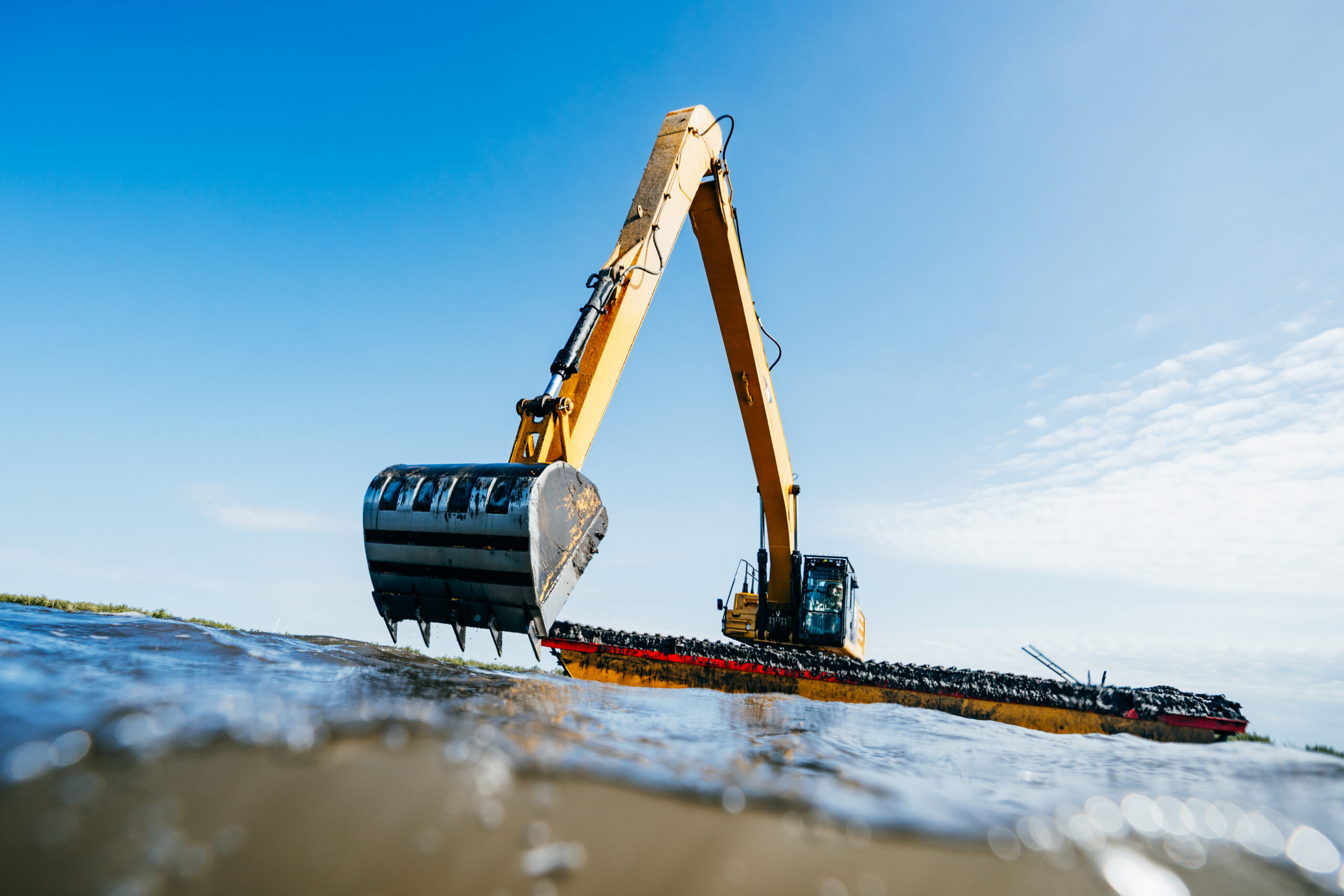
Coastal construction depends on one thing that is easy to overlook: the condition of the seabed, the shoreline, and the shallow water between them. Ports need deep channels, seawalls need stable foundations, and eroded beaches need fresh sediment. Ocean dredging is the process that makes many of these tasks possible.
Dredging is not only a job for large vessels working in open water. Many coastal sites sit in soft mud, tidal flats, and shallow margins where big dredgers cannot operate and standard land machinery sinks. In these zones, an amphibious excavator for ocean dredging often becomes the practical tool because it can float, walk on soft ground, and dig within the same work window.
This article explains what ocean dredging involves, how it supports coastal construction, which equipment is used, and what planners should consider when choosing amphibious marine dredging equipment.
What Ocean Dredging Involves
Dredging is the removal of sediment, sand, silt, or debris from the bottom of a water body, followed by relocation or reuse of that material. In coastal settings, the work usually serves one of four goals:
-
Deepening or maintaining channels and harbor basins
-
Supplying sand for beach and dune restoration
-
Preparing the seabed or shoreline for structures
-
Removing contaminated or unstable sediment
The process has three stages. First, material is loosened and lifted. Second, it is moved, either by pipeline, barge, or truck. Third, it is placed at a disposal or reuse location, which might be a containment area, a restoration site, or a construction fill zone.
Each stage must match site conditions. Water depth, tide range, sediment type, and access routes all influence which machines are suitable. A method that works well in a deep shipping channel may be impractical in a shallow marsh edge or a tidal inlet.
Why Dredging Matters for Coastal Construction
Coastal projects face constant movement of water and sediment. Currents deposit silt in channels, storms strip sand from beaches, and tides reshape inlets. Dredging lets engineers manage these forces rather than simply react to them.
Navigation Channels and Port Facilities
Ports and marinas rely on a minimum water depth for vessel access. Sediment builds up over time and reduces that depth, so maintenance dredging is a recurring need. New terminals, berths, and boat basins also require initial dredging before any structure can be built.
Shoreline Protection and Beach Nourishment
Erosion control projects often combine hard structures, such as revetments and breakwaters, with soft measures like sand placement. Dredged sand can rebuild a beach profile and give waves a buffer before they reach infrastructure. The sediment must be relocated efficiently and placed within narrow tolerances, which calls for precise, controllable equipment.
Foundations and Site Preparation
Construction near the waterline frequently begins with removing weak surface layers. Soft clay or loose silt cannot carry heavy loads, so contractors excavate it and replace it with engineered fill. Dredging also clears trenches for intake lines, outfalls, and utility crossings that run beneath the water.
Challenges of Working in Coastal Shallows
The most difficult dredging zones are often the narrow strip where land and sea overlap. Several conditions make this strip hard to work in:
-
Soft, saturated ground. Mud and loose sand cannot support the ground pressure of conventional tracked machines.
-
Variable water levels. Tides change the working depth through the day, which can strand floating equipment or flood land-based machines.
-
Limited access. Roads, ramps, and staging areas may not exist, especially along natural shorelines.
-
Environmental sensitivity. Marshes, seagrass beds, and nesting areas require careful, low-impact movement.
-
Worker safety. Unstable banks and shifting water raise risk for crews on foot and for equipment operators.
Large cutter suction and hopper dredgers handle deep, open water well. They are less suited to these constrained margins, which is where amphibious equipment fills the gap.
How an Amphibious Excavator for Ocean Dredging Helps
An amphibious excavator combines a standard excavator upper structure with a pontoon-based undercarriage. The pontoons provide buoyancy and spread weight across a wide area, so the machine can float in water and travel over soft mud without sinking. Tracks or paddle-style drive elements move it between water and land.
Because of this design, an amphibious excavator for ocean dredging can start work where other machines cannot. It does not need a separate barge, a prepared ramp, or firm ground to operate. For a deeper look at the mechanics, the article on how amphibious excavators operate in water and wetlands covers flotation, drive systems, and ground contact in more detail.
Low Ground Pressure and Flotation
Ground pressure is the main reason standard excavators fail in soft coastal soils. The weight of the machine concentrates on narrow tracks and pushes them into the mud. Pontoons distribute that same weight over a much larger surface, which keeps the machine on top of the ground and reduces disturbance to the surface layer.
Dredge Pumps and Attachments
Amphibious excavators can carry several attachments suited to dredging, including buckets, rakes, cutting tools, and excavator-mounted dredge pumps. A pump turns the excavator into a mobile hydraulic dredge. It loosens sediment and sends the slurry through a discharge line to a containment area or fill site. This setup is common in shallow work where large vessels cannot enter.
Access to Remote Sites
Many coastal construction sites lack road access. A machine that can be delivered in sections, assembled near the water, and moved under its own power reduces the need for temporary access roads and heavy mobilization. This shortens setup time and limits the footprint left on sensitive ground.
Amphibious Marine Dredging Equipment Compared
Choosing the right machine starts with understanding what each type does best. The table below compares common options used in coastal dredging and site preparation.
| Equipment Type | Typical Use | Main Strength | Main Limitation |
|---|---|---|---|
| Hopper dredger | Deep channels and offshore sand sourcing | High volume in open water | Needs deep water and port access |
| Cutter suction dredger | Channel deepening and large reclamation | Handles compact sediment and rock | Large crew and mobilization needs |
| Land excavator on a barge | Shallow trenching and near-shore digging | Familiar machine and attachments | Requires barge, tugs, and set depth |
| Standard tracked excavator on matting | Firm shoreline work | Low cost on stable ground | Unsuitable for soft mud or standing water |
| Amphibious excavator | Shallow water, tidal flats, and marsh edges | Floats and walks on soft ground | Lower volume than large dredgers |
No single option covers every project. Large coastal programs often use several machines in sequence, with big dredgers handling deep water and amphibious marine dredging equipment working the shallows, banks, and access corridors that the larger vessels cannot reach.
Amphibious Excavator Coastal Dredging in Practice
Amphibious excavator coastal dredging tends to be used in projects where precision, access, and ground protection matter more than raw volume. Typical applications include:
-
Clearing sediment from tidal creeks, canals, and drainage outlets
-
Excavating trenches for pipelines and cables that cross the shoreline
-
Supporting dredge pipelines by working at discharge and containment sites
-
Shaping berms, dikes, and containment cells for dredged material
-
Rebuilding eroded banks and shoreline edges
A standard question during planning is whether a conventional machine could do the same job with extra preparation. The comparison in this guide on whether excavators can work in water explains why regular units are limited by depth, buoyancy, and sealing, and when amphibious designs become the more practical choice.
Planning the Work
Good dredging starts with data. Survey the existing bed elevations, sample the sediment, and map tide ranges before mobilizing any machine. Sediment type affects pump selection and disposal options, while tidal windows determine when floating equipment can reach the work area. Permits are also part of planning, since dredging and placement of material usually require regulatory approval.
Managing Environmental Impact
Coastal margins are ecologically active areas. Low ground pressure reduces rutting and compaction, and the ability to work without building temporary roads limits vegetation loss. Turbidity controls such as silt curtains, along with careful placement of dredged material, help protect water quality. The reuse of clean sediment for restoration or fill is increasingly common because it keeps material in the local system rather than removing it.
Safety on Soft Ground and Open Water
Safety is a design factor as much as an operating one. Machines that float and stay stable on soft ground keep operators out of situations where equipment could sink or tip. The discussion of how floating excavators improve safety in water construction describes how stable platforms, controlled access, and proper procedures reduce risk for crews working near unstable banks.
Choosing Equipment for a Coastal Dredging Project
Selecting machinery is less about picking a favorite model and more about matching a machine to site conditions. A few questions help narrow the options:
What is the water depth range? Amphibious excavators excel in shallow and transitional zones. Deeper water may call for a different primary dredger.
How soft is the ground? The softer the sediment, the more important flotation becomes.
How will equipment reach the site? Remote locations benefit from machines that can be shipped in sections and assembled on site.
What attachments are needed? Dredge pumps, buckets, and cutting tools should match the sediment and the disposal method.
What is the project duration? Short jobs often suit rental, while long programs may justify a lease or purchase.
Wilco Marsh Buggies builds and supplies amphibious excavators and related equipment for wetland, marsh, and shallow-water work. Its fleet covers pontoon excavators, cargo carriers, and cranes, and units can be configured with attachments such as dredge pumps depending on the job. Rental, leasing, and contracting arrangements allow project teams to match the commitment to the scope of work. Discussing site conditions early helps determine whether a standard configuration is enough or whether customization is needed.
Conclusion
Ocean dredging underpins coastal construction by keeping channels open, rebuilding shorelines, and preparing stable ground for structures. The hardest parts of these projects are often in the shallows, where soft sediment, tides, and limited access make conventional machines impractical. Amphibious marine dredging equipment is well suited to these zones because it floats, spreads its weight, and carries the attachments needed for excavation and pumping.
When project teams evaluate an amphibious excavator for ocean dredging or plan amphibious excavator coastal dredging, they get the best results by combining accurate site data, the right attachments, and equipment matched to water depth and ground conditions. If you are planning a coastal or shallow-water project and want to review equipment options, contact our team at Wilco Marsh Buggies to discuss your site and requirements.
Frequently Asked Questions
1. What is ocean dredging used for in coastal construction?
Ocean dredging removes or relocates sediment to deepen channels, supply sand for beach restoration, prepare foundations, and clear trenches for utilities. It supports ports, shoreline protection, and many other near-water structures.
2. How does an amphibious excavator for ocean dredging work?
It uses pontoons to float and distribute weight, which lets it operate in shallow water and on soft mud. Attachments such as buckets or dredge pumps remove and move sediment, and the machine can travel between water and land without extra support equipment.
3. Is amphibious marine dredging equipment suitable for deep water?
Amphibious equipment is best in shallow and transitional zones such as tidal flats, canals, and marsh edges. Deep channels and offshore work are usually handled by larger dredgers, with amphibious machines supporting the shallow and shoreline portions of the project.
4. Can amphibious excavator coastal dredging reduce environmental disturbance?
It can help. Low ground pressure limits rutting, and the ability to work without temporary access roads reduces vegetation damage. Results still depend on good planning, turbidity control, and proper handling of dredged material.
5. Do dredging projects require permits?
In most regions, yes. Dredging and the placement of dredged material typically need approval from environmental and maritime authorities. Requirements vary by location, so project teams should confirm local rules early in planning.
6. Should a project rent, lease, or buy an amphibious excavator?
The answer depends on duration and frequency of use. Rentals suit short projects, leases suit extended programs, and ownership suits organizations with ongoing amphibious work. Comparing total cost across the expected project timeline gives a clearer picture.