

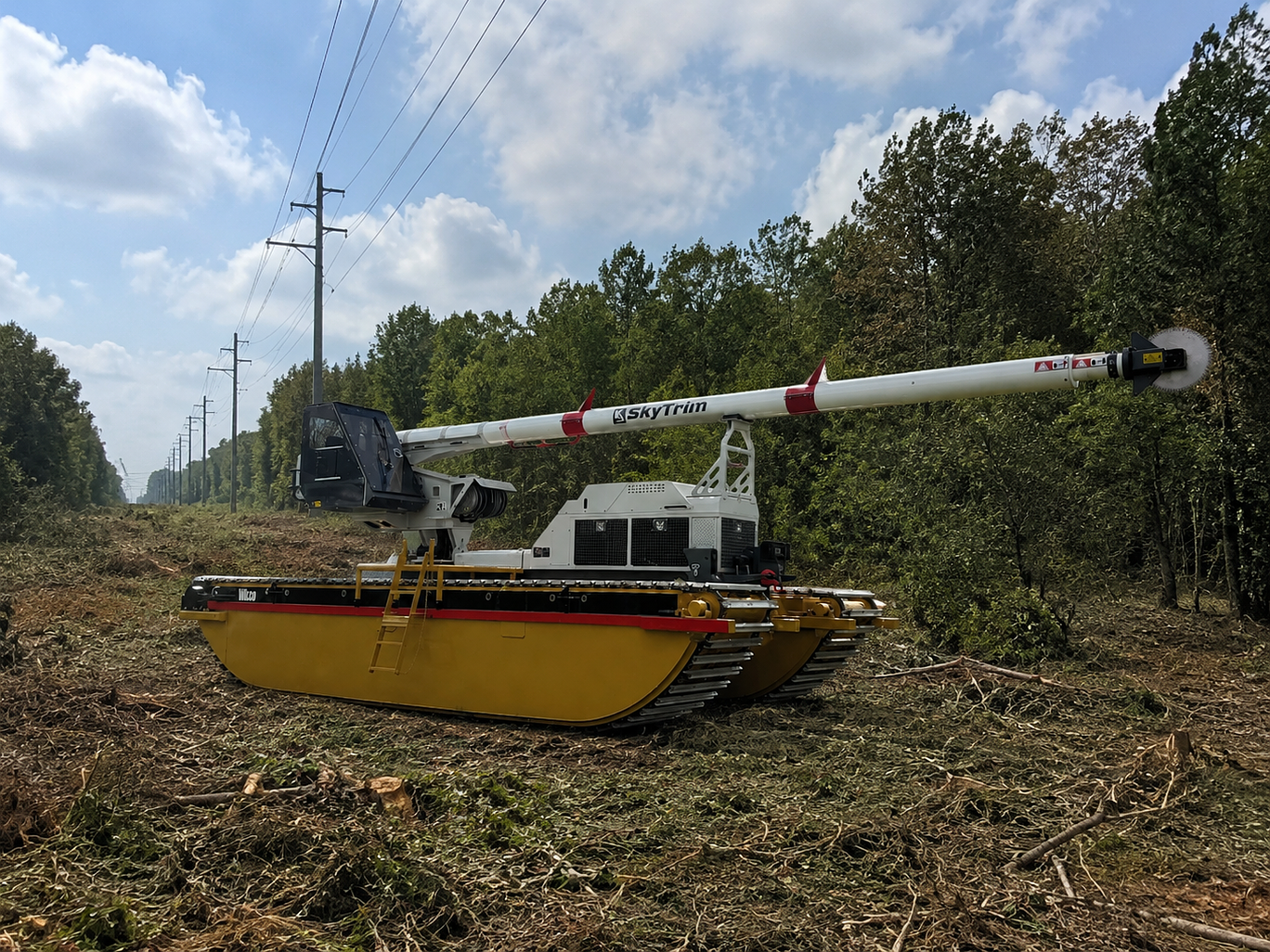
Wetlands, marshes, and swamps present ground conditions that standard construction equipment simply cannot handle. Soft mud, shallow water, and unstable soil make it difficult for wheeled or tracked machines to move, let alone dig, dredge, or clear vegetation. This is where an amphibious excavator becomes essential. Built with a specialized undercarriage and floatation system, this equipment is designed to work directly in water and on saturated land without sinking or losing stability.
This article explains how an amphibious digger operates, what makes it different from a standard excavator, and where this type of machine is typically used across water and wetland environments.
What Is an Amphibious Excavator?
An amphibious excavator is a heavy equipment machine built on a pontoon-style undercarriage instead of standard steel tracks. This undercarriage allows the machine to float on water while also moving across soft, unstable ground such as mud, silt, and marshland. Unlike conventional excavators, which rely on ground contact and firm soil for stability, an amphibious excavator is engineered to distribute weight evenly across large sealed pontoons, allowing it to remain stable in conditions where a regular machine would sink or tip over.
These machines are also referred to as a pontoon excavator, floating excavator, marsh buggy excavator, or swamp buggy excavator, depending on the region and the specific configuration of the undercarriage. While naming conventions vary, the core function remains the same: performing excavation, dredging, or vegetation management work in wet or waterlogged environments.
How Amphibious Excavators Operate in Water and Wetlands
Understanding how this equipment functions requires looking at three main components: the pontoon undercarriage, the propulsion system, and the excavator arm configuration.
Pontoon Undercarriage and Buoyancy
The foundation of any amphibious excavator is its pontoon undercarriage. These pontoons are large, sealed, and compartmentalized steel structures that provide buoyancy in open water and weight distribution on soft ground. Because the pontoons spread the machine’s weight over a much larger surface area than standard tracks, ground pressure is significantly reduced. This is what allows an amphibious undercarriage excavator to move across marshland or shallow water without becoming stuck.
Many pontoon designs also include internal compartments, so if one section is damaged, the machine can still maintain buoyancy through the remaining sealed chambers. This built-in redundancy is an important safety feature for equipment that regularly operates in water.
Propulsion in Water and on Land
On land, amphibious excavators typically move using rubber tracks or steel cleats fitted to the pontoons, allowing traction across mud and uneven wetland terrain. In open water, propulsion often comes from hydraulically driven paddle wheels or propellers mounted on the pontoons. This dual propulsion setup is what allows the machine to transition between solid ground, saturated soil, and open water without requiring a separate vehicle or barge.
The operator controls speed and direction from an elevated cab, which also improves visibility over tall reeds, brush, and water that would otherwise obstruct the operator’s view on a standard excavator.
Long Reach Arms and Attachments
Many wetland and dredging projects require equipment to work at a distance rather than directly at the edge of the water. This is where the amphibious long reach excavator comes into use. Extended boom and arm configurations allow the machine to dig, dredge, or clear vegetation several meters beyond its own position, reducing the need for the machine to enter deeper or less stable areas of a wetland.
Depending on the project, the excavator arm can be fitted with a standard bucket, a dredging bucket, a grapple, or a mulching head. This adaptability is one of the main reasons amphibious equipment is used across such a wide range of wetland and water-based projects. Wilco Marsh Buggies offers amphibious excavator solutions designed to support these demanding applications while improving access, efficiency, and operational flexibility in challenging environments.
Common Applications of Amphibious Excavators
Amphibious excavators are used across several industries where standard equipment cannot access the worksite. The table below outlines common applications and how each one relies on the machine’s amphibious design.
| Application | How the Amphibious Excavator Is Used |
|---|---|
| Canal and waterway dredging | An amphibious excavator dredge removes accumulated silt, sediment, and debris to restore water flow and depth. |
| Wetland restoration | Vegetation clearing and soil grading help re-establish natural wetland habitat. |
| Flood control maintenance | Clearing and reshaping drainage channels helps reduce flood risk in low-lying areas. |
| Pond and lake maintenance | Removing sediment buildup and invasive vegetation from the water bed helps maintain waterways. |
| Marsh and swamp construction support | A marsh excavator or swamp excavator prepares soft ground for pipelines, levees, or access roads. |
| Aquatic vegetation control | An amphibious swamp buggy fitted with a mulching head clears reeds, cattails, and other overgrowth. |
| Environmental remediation | Removing contaminated sediment or debris from wetland and shoreline areas supports environmental remediation. |
Amphibious Excavator vs Standard Excavator
The difference between an amphibious excavator and a standard excavator comes down to ground pressure, stability, and mobility in water. A conventional excavator relies on firm ground and steel tracks, which sink or lose traction in mud, silt, or saturated soil. An amphibious digger, by contrast, is built specifically to distribute weight across pontoons, allowing it to work in areas that would otherwise require dewatering, temporary access roads, or matting before any equipment could be brought in.
This difference significantly reduces both the cost and environmental disturbance associated with wetland projects, since there is less need to modify the natural terrain simply to get equipment into position.
Why Amphibious Equipment Matters for Wetland Projects
Wetlands play an important role in water filtration, flood control, and habitat support, which means construction and maintenance work in these areas needs to be handled carefully. Using a marsh buggy excavator or swamp buggy excavator reduces the physical footprint left behind compared to building temporary roads or using heavy conventional machinery that requires extensive ground preparation.
Because the pontoon undercarriage spreads weight so effectively, these machines can complete dredging, clearing, or excavation work while limiting soil compaction and disturbance to surrounding vegetation. For contractors working on environmental or regulatory-driven projects, this can make amphibious equipment a more practical choice than attempting to adapt standard machinery to wet conditions.
For projects located in Louisiana’s marshes, swamps, and coastal wetlands, more detail on regional applications and equipment configurations is available on our page dedicated to amphibious excavator services in Louisiana.
Factors to Consider Before Choosing an Amphibious Excavator
Not every wetland or water-based project requires the same configuration of equipment. A few factors typically influence the right setup:
- Water depth and ground softness: Deeper water or very soft mud may require larger pontoons for added buoyancy and stability.
- Reach requirements: Projects that involve dredging or clearing at a distance from the machine’s position often call for an amphibious long reach excavator.
- Attachment needs: Dredging, grading, and vegetation clearing each require different attachments, so the excavator arm should match the scope of work.
- Project duration and access: Sites with limited access points benefit from equipment that can move between land and water without additional transport.
Working with an experienced operator who understands these variables helps ensure the right machine is used for the specific wetland or marsh conditions on site.
Get Started With Wilco Marsh Buggies
Wilco Marsh Buggies provides amphibious excavator equipment and operators experienced in dredging, clearing, and construction support across marshes, swamps, and wetland environments. Whether your project involves waterway maintenance, wetland restoration, or site preparation in soft or saturated ground, our team can help determine the right equipment configuration for the job.
Contact us today to discuss your project requirements and find out how our amphibious excavators can support your next water or wetland job.
Frequently Asked Questions
1. What is an amphibious excavator used for?
An amphibious excavator is used for dredging, excavation, vegetation clearing, and construction support in wetlands, marshes, swamps, and shallow water where standard equipment cannot operate.
2. How does an amphibious excavator stay afloat in water?
The machine floats using sealed, compartmentalized pontoons that provide buoyancy and distribute weight across a wide surface area, preventing it from sinking in water or soft ground.
3. What is the difference between a pontoon excavator and a standard excavator?
A pontoon excavator uses buoyant, sealed pontoons instead of standard steel tracks, allowing it to work in water and soft terrain, while a standard excavator requires firm, stable ground to operate safely.
4. Can an amphibious excavator work on both land and water?
Yes. Amphibious excavators are designed to transition between soft ground, saturated wetlands, and open water using a combination of track propulsion and water-based propulsion systems.
5. What attachments can be used with an amphibious digger?
Common attachments include standard buckets, dredging buckets, mulching heads, and grapples, depending on whether the work involves excavation, dredging, or vegetation clearing.
6. Is an amphibious excavator suitable for wetland restoration projects?
Yes. Because it reduces soil compaction and does not require temporary access roads, an amphibious excavator is well suited to wetland restoration and other environmentally sensitive projects.