
Dredging is already demanding work. It becomes far harder when the job site is a marsh, a flooded bank, a shallow canal edge, or a swamp where the ground cannot carry a conventional machine. Standard excavators sink into saturated soil, and barges cannot always reach shallow or vegetation-choked areas. This is where amphibious dredging becomes a practical solution.
Amphibious excavators are built to float, walk, and dig in conditions that stop ordinary equipment. Companies such as Wilco Marsh Buggies design and supply this type of machinery for contractors who need to work in soft terrain. This article explains how these machines support dredging, what makes them different from standard equipment, and what to consider when planning a project in difficult ground.
Why Difficult Terrain Complicates Dredging
Dredging removes sediment, silt, and debris from a waterway or wetland to restore depth, improve flow, or rebuild land. On firm ground with deep water, the work is relatively straightforward. In marshes and wetlands, several problems appear at once.
First, the ground is soft. Saturated mud has very little bearing strength, so a heavy machine with narrow tracks quickly sinks. Second, water depth is often too shallow for floating plant but too deep for walking equipment. Third, vegetation, root mats, and debris interfere with access and with the dredging process itself. Finally, the surrounding environment is often sensitive, which means crews need to limit damage to banks, vegetation, and habitat.
Building temporary access roads or mats is one way to deal with these problems, but it adds cost, time, and ground disturbance. Amphibious equipment removes much of that need because the machine carries its own flotation and moves directly across the work area.
What Amphibious Dredging Involves
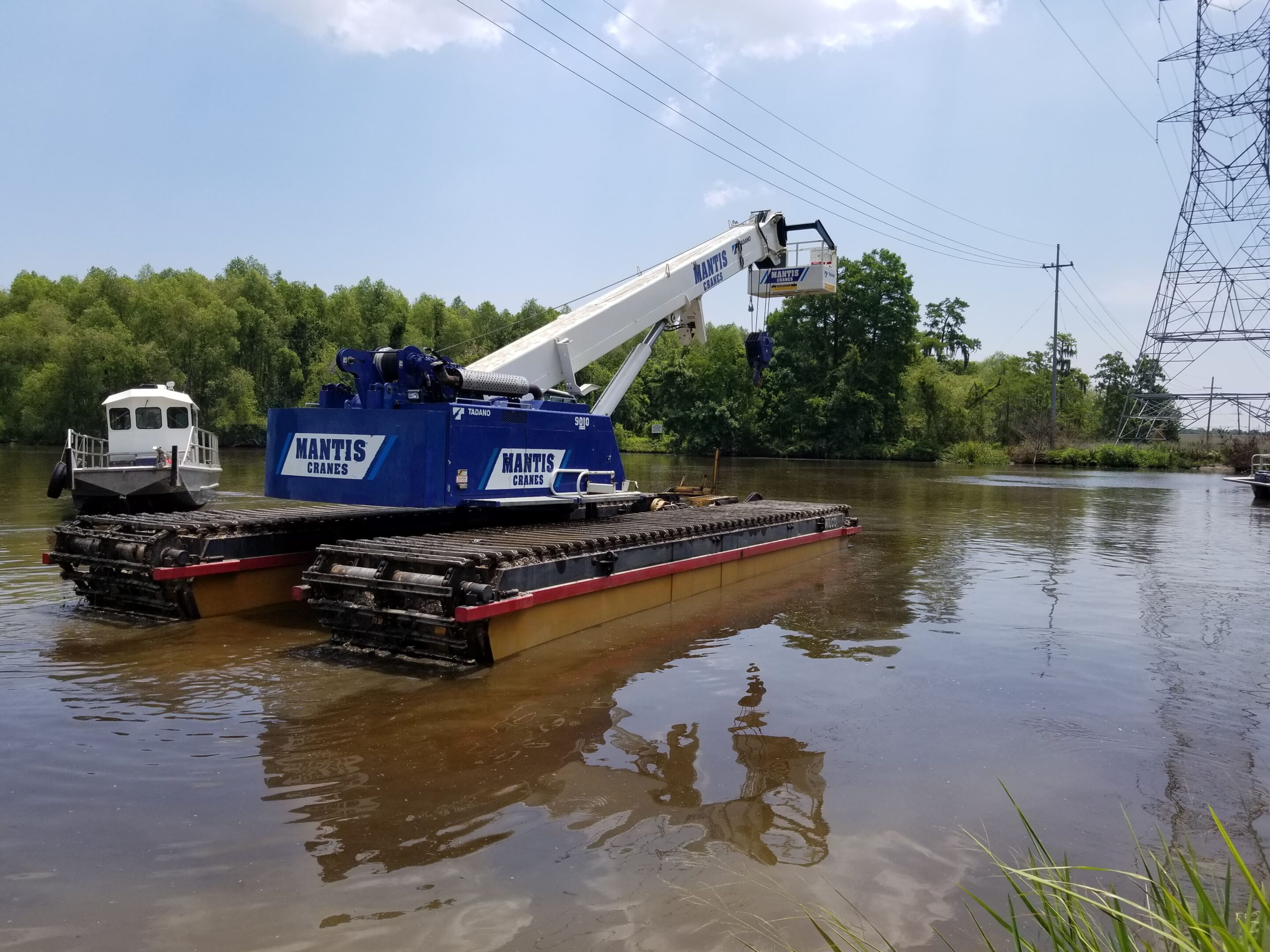
Amphibious dredging uses an excavator mounted on a pontoon-style undercarriage or similar flotation system. The machine can sit on soft ground, float in shallow water, and reposition across both without leaving the job site or switching equipment.
Flotation and Low Ground Pressure
The defining feature of an amphibious excavator is its ability to spread weight across a large area. Pontoons and wide undercarriages reduce ground pressure so the machine rides on top of soft material rather than cutting into it. This lets an operator work in mud, standing water, and thick vegetation without becoming stuck.
Stability matters as much as flotation. A dredging excavator extends its boom, lifts loaded buckets, and swings material while standing on an unstable surface. The undercarriage must keep the machine level and balanced during these movements, so structural design is a central part of any amphibious unit.
Long Reach and Interchangeable Attachments
Dredging often requires reaching beyond the machine’s footprint. Long reach booms let operators work from a stable position while excavating material several meters away. This reduces the number of times the machine must move across fragile ground.
Attachments also expand what the machine can do. Depending on the project, excavators may be fitted with:
-
Standard and wide buckets for removing sediment
-
Dredge pumps for moving slurry through a pipeline
-
Rakes for clearing debris and vegetation
-
Cutting tools for roots, reeds, and dense plant growth
Choosing the right combination depends on the type of material, the water depth, and the disposal method planned for the project.
Marsh Buggy Dredging in Practice
The term marsh buggy describes a family of amphibious machines originally developed for working in wet, soft coastal ground. Marsh buggy dredging relies on these machines to move through terrain that has no firm base at all.
A typical job might begin with the machine entering the site under its own power or being delivered in sections and assembled nearby. Once in position, the operator excavates sediment, places it in a designated disposal area, or feeds it into a dredge pump. Because the machine can travel along a channel or across a marsh flat, the crew can work in a continuous sequence rather than repeatedly setting up and removing temporary access.
For a closer look at how these machines function in saturated terrain, explore how amphibious excavators operate in water and wetlands, including their applications in ocean dredging.
Reaching Areas Barges Cannot Access
Floating dredges work well in open, deep water. They are less useful in narrow channels, shallow margins, and vegetated edges. Amphibious excavators fill this gap. They can approach a shoreline from the water side, work along a bank, and move into shallow areas where draft limits would stop a vessel.
This makes them a good fit for the edges of a project, where a larger dredge handles open water and an amphibious unit finishes the shallow zones and banks.
Reducing Site Disturbance
Wide flotation reduces rutting and compaction, which matters in wetlands where disturbed ground can take years to recover. Working directly from the machine also reduces the footprint of the operation, since fewer access roads, mats, or staging platforms are needed. For restoration work, where the goal is to improve habitat, limiting disturbance is often a permit condition as well as a practical preference.
Wetland Dredging Equipment: What Contractors Should Look For
Choosing wetland dredging equipment requires matching the machine to the site rather than picking the largest unit available. Several factors guide the decision.
Ground conditions come first. Operators should understand how soft the substrate is and whether firm ground exists below the surface. Water depth is next, since it determines how much flotation is needed and whether the machine will mostly float or mostly walk. Material type also matters, because fine silt, clay, and vegetation-heavy sediment each respond differently to buckets and pumps.
Reach and capacity should follow from the layout of the work area. A long channel may call for a long reach boom, while a small pond may be better served by a compact unit. Finally, transport is a real consideration. Some machines can be disassembled for shipping and reassembled at the site, which helps when the project area has no good road access.
Wilco Marsh Buggies builds amphibious excavators, cargo carriers, and related soft terrain equipment, and works with contractors on rental, leasing, and custom configurations. The comparison below shows how this type of equipment addresses common site challenges.
| Site Challenge | Limitation of Standard Equipment | How Amphibious Equipment Responds |
|---|---|---|
| Soft, saturated mud | Narrow tracks sink and the machine becomes stuck | Pontoons spread weight and keep the machine on the surface |
| Shallow water | Too shallow for barges, too deep for walking equipment | Machine floats or walks depending on depth |
| Dense vegetation and root mats | Blocks access and slows excavation | Cutting tools and rakes clear plant growth while the machine moves through it |
| Limited road access | Requires temporary roads or mats | Machine travels directly across the work area |
| Remote or narrow channels | Large dredges cannot enter | Compact or long reach units work from the water or bank |
| Sensitive habitat | Heavy ground disturbance and rutting | Low ground pressure reduces damage to soil and vegetation |
| Material disposal | Hauling over unstable ground is difficult | Dredge pumps and long reach booms place material near the work area |
Typical Applications for Amphibious Dredging
Amphibious equipment is used wherever soft ground and water overlap. Common applications include canal and lake dredging, sediment and silt removal, shoreline stabilization, and the construction or repair of containment areas for dredged material.
In restoration projects, dredged sediment is often placed to rebuild marsh surfaces or create new habitat. Amphibious excavators are well suited to this work because they can move sediment and shape the placement area without damaging the surrounding marsh. Utility corridors that cross wetlands also benefit, since crews can maintain channels and clear access without building permanent roads.
The reasons these machines have become a standard choice for wet ground are outlined in the discussion of why marsh buggies are preferred for wetland access, which explains how access shapes the entire project plan.
Supporting Larger Dredging Operations
Amphibious excavators often work alongside larger dredges rather than replacing them. A hydraulic dredge might handle open water while an amphibious unit prepares the pipeline route, clears vegetation, builds disposal containment, or finishes the edges. This division of work lets each machine operate where it is most effective.
Planning a Dredging Project in Difficult Terrain
Good planning reduces cost and delay. A site assessment should identify soil strength, water depth, access points, and any areas that require special protection. Operators should also decide early how dredged material will be handled, since disposal often determines the equipment mix.
Scheduling matters too. Water levels, tides, and seasonal conditions can change how a site behaves from one month to the next. A marsh that is workable in dry weather may become impassable after heavy rain, and amphibious equipment gives crews more flexibility to keep working through those changes.
Efficiency gains come from reducing the time spent on access and setup. The guide on improving project efficiency in wetlands with marsh buggies looks at how crews can organize work to take advantage of this.
Safety and Environmental Considerations
Working in soft terrain exposes crews to risks such as machine instability, unstable banks, and limited emergency access. Amphibious equipment reduces some of these risks because the machine does not depend on the ground to support it. Even so, operators should be trained in working on floating or semi-floating platforms, and sites should have clear procedures for recovery and emergency response.
Environmental compliance is equally important. Permits often specify where sediment can be placed, how turbidity is controlled, and how much disturbance is allowed. Low ground pressure, controlled excavation, and careful disposal planning all help projects meet these requirements. Contractors should confirm permit conditions before mobilizing equipment.
Rent, Lease or Buy: Choosing an Equipment Approach
Many dredging projects are short or seasonal, so ownership is not always practical. Rental suits a single project with a defined schedule, while leasing fits longer programs that need equipment over an extended period. Purchase makes sense for companies that work in soft terrain regularly.
Whichever route is chosen, it helps to discuss the project with the equipment provider early. Details such as water depth, soil type, reach, attachments, and transport can all affect which machine is appropriate. Custom configuration is also possible when a standard unit does not fit the work.
Conclusion
Difficult terrain does not have to stop a dredging project. Amphibious excavators combine flotation, stability, long reach, and flexible attachments, which lets crews work in marshes, shallow channels, and saturated ground that conventional equipment cannot handle. Whether the project involves marsh buggy dredging, canal edge work, or sediment removal for restoration, the right amphibious machine reduces access problems and limits site disturbance.
Selecting suitable wetland dredging equipment starts with understanding the site, the material, and the disposal plan. Wilco Marsh Buggies works with contractors to match amphibious equipment to these requirements, whether through rental, leasing, purchase, or custom configuration. If you are planning a dredging project in soft or flooded terrain, contact our team to discuss your site conditions and equipment needs.
Frequently Asked Questions
1. What is amphibious dredging?
Amphibious dredging is the removal of sediment and debris using an excavator that can float or travel across soft ground and shallow water. It is used where standard excavators would sink and where barges cannot reach.
2. How does marsh buggy dredging differ from standard dredging?
Marsh buggy dredging uses amphibious machines that move directly across marsh, mud, and shallow water. Standard dredging usually relies on firm ground for land equipment or deeper water for floating vessels. The marsh buggy approach covers the terrain between those two conditions.
3. What wetland dredging equipment is commonly used?
Common wetland dredging equipment includes amphibious excavators with long reach booms, dredge pumps, buckets, rakes, and cutting tools. Cargo carriers are also used to move materials and personnel across soft ground.
4. Can amphibious excavators work in very shallow water?
Yes. Their flotation systems allow them to operate in shallow water, on saturated ground, and in the transition zone between the two. This is one of their main advantages over barges and standard tracked machines.
5. Do amphibious excavators damage wetlands?
All heavy equipment has some impact, but low ground pressure reduces rutting and compaction compared with conventional machines. Careful planning, permit compliance, and controlled disposal further limit disturbance.
6. Is it better to rent or buy an amphibious excavator?
It depends on how often the equipment will be used. Rental and leasing suit project-based work, while purchase is more practical for contractors with ongoing soft terrain needs.
7. Can amphibious excavators be customized for a specific project?
Yes. Reach, attachments, and configuration can be adjusted to match site conditions, material type, and project goals.