

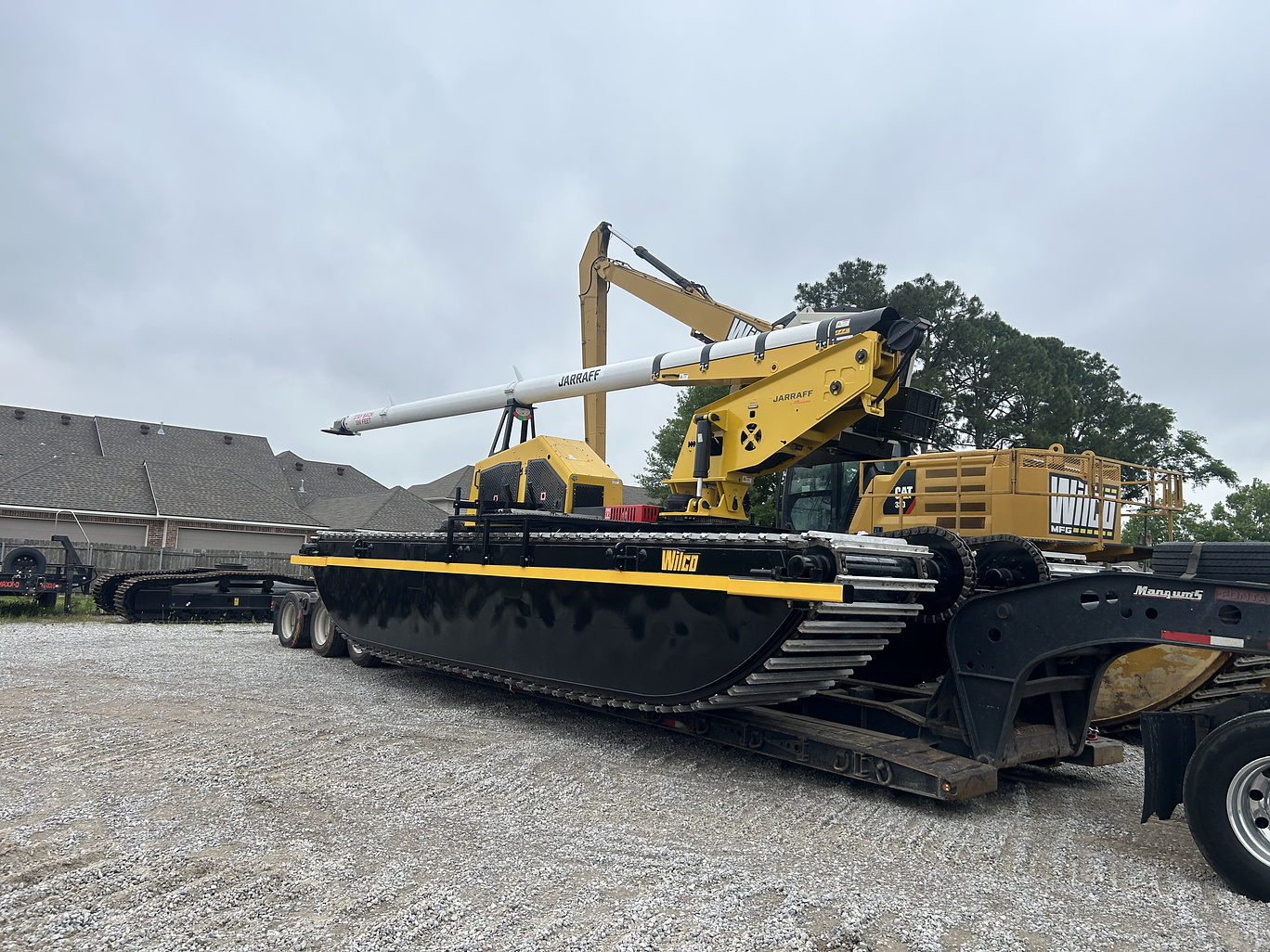
Wetlands, swamps, and marshlands present some of the most difficult working conditions for heavy equipment. Soft, saturated ground swallows tires and tracks, standard machinery gets stuck within minutes, and project timelines stretch far beyond budget. This is exactly why contractors, utility companies, and environmental crews across Florida and beyond rely on a marsh buggy to get work done safely and efficiently.
A marsh buggy is purpose built for terrain that regular construction equipment simply cannot handle. Whether the job involves pipeline work, vegetation clearing, environmental remediation, or utility maintenance, a marsh buggy provides the stability and mobility that wetland projects demand. In this article, we will look at what makes marsh buggies the preferred equipment for wetland access, how they compare to other options, and what to consider before you buy or rent one.
What Is a Marsh Buggy?
A marsh buggy is an amphibious marsh buggy designed to travel across soft, muddy, and partially submerged ground without sinking or getting stuck. Unlike conventional excavators or trucks, these machines are built with wide tracks or pontoon style undercarriages that spread the machine’s weight over a much larger surface area. This significantly reduces ground pressure, allowing the buggy to move through swamp vehicles terrain that would trap almost anything else.
Marsh buggies are often paired with attachments such as excavator arms, mulching heads, or augers, turning them into fully functional marsh excavators. This combination of mobility and working capability is why marsh buggy excavator units have become a standard tool in wetland construction and land management.
Why Standard Equipment Fails in Wetlands
Traditional excavators and skid steers are engineered for firm, compact ground. When these machines are used in marsh or swamp conditions, several problems tend to show up quickly.
Standard tracked or wheeled equipment concentrates weight over a small footprint, which causes it to sink into soft soil. Once stuck, recovery often requires additional heavy machinery, which can cause further ground disturbance and delay the project. Repeated attempts to move through saturated ground can also damage sensitive wetland ecosystems, leading to compliance issues on environmentally regulated sites.
This is where marsh buggies and marsh excavators solve the problem. Their low ground pressure design allows them to work in areas that would otherwise be inaccessible, without the repeated stops, recoveries, and environmental disruption that standard equipment causes.
Key Benefits of Using a Marsh Buggy for Wetland Access
Low Ground Pressure Design
The defining feature of any marsh buggy is its ability to distribute weight evenly. This keeps the machine on top of soft ground rather than sinking into it, even in standing water or deep mud.
Amphibious Capability
Many marsh buggy models, including those often referred to as marsh master or marshmaster units, can move through shallow water as easily as they move across land. This amphibious marsh buggy capability removes the need for separate land and water equipment on the same project. For contractors evaluating an amphibious excavator for rent, marsh buggy-based equipment can provide a practical and efficient solution for accessing challenging wetland environments.
Versatility with Attachments
A marsh buggy is rarely limited to one function. With interchangeable attachments, the same base machine can operate as a marsh buggy excavator for digging and grading, or switch to mowing, mulching, and vegetation management tools for land clearing work.
Reduced Environmental Impact
Because marsh buggies distribute weight so effectively, they leave a much smaller footprint on sensitive wetland habitats compared to conventional machinery. This makes them a practical choice for projects that require environmental compliance and habitat protection.
Lower Operating Risk
Getting standard equipment stuck in wetland terrain is not just a delay, it is a safety concern. Marsh buggies are designed specifically to avoid this scenario, which reduces the risk of accidents during recovery operations.
Marsh Buggy vs Swamp Buggy vs Marsh Master
These terms are often used interchangeably, but there are some practical differences worth understanding, especially when comparing options like a mini swamp buggy against a full sized marsh excavator platform.
| Feature | Marsh Buggy | Swamp Buggy | Marsh Master |
|---|---|---|---|
| Primary Use | Excavation, utility, construction | General wetland transport and access | Compact utility and light construction |
| Typical Size | Mid to large | Varies, includes mini swamp buggy models | Compact and lightweight |
| Ground Pressure | Very low | Low to moderate | Very low |
| Common Attachments | Excavator arm, auger, mulcher | Platform beds, basic tool mounts | Mowing decks, small excavator arms |
| Water Capability | Amphibious in most models | Limited to shallow water | Amphibious |
| Best For | Heavy wetland construction and digging | Site access and light transport tasks | Compact jobs and tighter access points |
Understanding these differences helps buyers choose equipment that matches their actual project needs rather than overpaying for capability they will not use, or underbuying for a job that requires more power and reach.
Applications of Marsh Buggies and Marsh Excavators
Marsh buggies are used across a wide range of industries where wetland or unstable ground access is required.
Oil and gas companies use marsh excavators for pipeline installation, maintenance, and right of way clearing in swamp regions. Environmental contractors use them for habitat restoration, invasive vegetation removal, and dredging support. Utility companies rely on marsh buggies to access power lines and infrastructure located in flood prone or marshy areas. Land management and forestry crews use them for mulching, clearing, and controlled land maintenance in wetland adjacent properties.
Because of this range of use cases, demand for both new and used swamp buggies for sale has grown steadily, particularly in regions with large wetland footprints such as Florida.
Buying vs Renting: Swamp Buggy for Sale or Marsh Buggy Rental
Deciding whether to purchase or rent depends largely on how often the equipment will be used.
For companies with ongoing wetland projects, purchasing a swamp buggy for sale in Florida or elsewhere is usually the more cost effective long term option. Regular use justifies the upfront investment, and owning the machine allows for customization with specific attachments over time.
For one off or seasonal projects, an amphibious excavator rental near me search often makes more financial sense. Marsh buggy rental options allow contractors to access the right equipment without a long term commitment, which is useful for short duration jobs or unpredictable project schedules. If you are weighing rental options, it helps to know what to look for in a marsh buggy rental partner before signing an agreement.
Used swamp buggies for sale are also a practical middle ground. A well maintained used unit can offer significant savings while still providing reliable performance, provided it comes from a reputable seller with a documented maintenance history.
What to Consider Before a Swamp Buggy Purchase
Before committing to a swamp buggy sale, it helps to evaluate a few key factors.
Start with the type of work the machine will primarily handle, since excavation, mowing, and general transport each favor different configurations. Next, consider the size of the unit. A mini swamp buggy may be sufficient for tighter access points, while larger projects may require a full sized marsh excavator.
Budget planning should also account for realistic marsh master pricing based on size, attachments, and condition, whether new or used. Finally, confirm what attachments are included or compatible, since the right attachment setup can significantly extend the machine’s usefulness across multiple project types.
Why Choose Wilco Marsh Buggies
Wilco Marsh Buggies has built a reputation for supplying dependable marsh buggies and marsh excavators designed specifically for demanding wetland conditions. With a focus on durable construction and practical attachment options, Wilco Marsh Buggies serves contractors, utility companies, and environmental teams who need equipment that performs reliably in swamp and marsh environments.
Whether you are searching for a marsh buggy for sale, exploring swamp buggy sales, or comparing marsh buggy excavator options for an upcoming project, having a knowledgeable supplier makes the buying process considerably easier. Wilco Marsh Buggies works directly with customers to match the right machine to the right job, rather than pushing a one size fits all solution.
If your project requires dependable wetland access equipment, Contact us today to discuss your requirements and find the right marsh buggy for your operation.
Frequently Asked Questions
1. What is the difference between a marsh buggy and a standard excavator?
A marsh buggy is designed with a wider, low ground pressure undercarriage that allows it to operate on soft, saturated, or partially submerged ground. A standard excavator is built for firm ground and will typically sink or get stuck in wetland conditions.
2. Can a marsh buggy work in standing water?
Many marsh buggy models, particularly amphibious marsh buggy units, are capable of operating in shallow standing water in addition to soft or muddy terrain.
3. Is it better to buy or rent a swamp buggy?
This depends on how frequently the equipment will be used. Companies with ongoing wetland projects usually benefit more from purchasing, while those with short term or occasional needs may prefer a marsh buggy rental.
4. What attachments can be used with a marsh excavator?
Common attachments include excavator arms for digging, mulching heads for vegetation clearing, and augers for drilling. The right attachment depends on the specific project requirements.
5. How much does a marsh buggy cost?
Pricing varies based on size, condition, and attachments. Marsh master pricing and general marsh buggy pricing depend on whether the unit is new or used, along with its configuration.
6. Are used swamp buggies for sale a reliable option?
Yes, provided the unit has been properly maintained and comes with a documented service history. A used swamp buggy can offer strong value for buyers working within a tighter budget.