

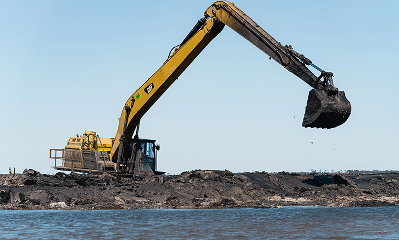
Water-based construction projects present unique challenges for marine construction companies. Working on lakes, rivers, marshes, or other waterlogged areas requires equipment that can operate safely and efficiently on water or soft terrain. Conventional excavators are often unsuitable for these environments because they are designed for solid ground. This is where pontoon excavators become essential.
Pontoon excavators, also known as floating excavators, combine the lifting power of traditional excavators with the ability to float on water or traverse marshy areas. They are widely used in dredging, shoreline restoration, wetland maintenance, and other water-based projects. This guide explains what pontoon excavators are, their types, capabilities, and when to use them, helping marine construction companies make informed equipment decisions.
What is a Pontoon Excavator?
A pontoon excavator is a type of excavator mounted on pontoons that allow it to float and operate in water-based or soft terrain environments. Unlike standard excavators, pontoon excavators are designed to work on lakes, rivers, swamps, and marshes without sinking or losing stability. They are highly effective for lifting, dredging, excavation, and material handling in marine and wetland projects.
Key Features of Pontoon Excavators
Pontoon excavators have several features that make them ideal for water-based construction projects:
- Floating pontoons provide stability and buoyancy, allowing operation on water and soft ground.
- Hydraulic boom and attachments enable excavation, dredging, and lifting heavy materials.
- Wide base and low ground pressure reduce the risk of sinking in marshy or muddy environments.
- Multi-functional attachments such as clamshell buckets, dredging arms, and pile-driving equipment enhance versatility.
These features allow pontoon excavators to complete tasks that would be impossible for land-based equipment, making them essential for marine construction companies.
Types of Pontoon Excavators
Pontoon excavators come in various designs to suit different project requirements. Understanding the types helps construction teams select the best equipment for each application.
Single vs. Double Pontoon Excavators
Single pontoon excavators feature a single flotation unit beneath the main body, providing stability in calm or shallow water. They are often more compact and easier to transport. Double pontoon excavators have two flotation units on either side, offering greater stability and lifting capacity. Double pontoon designs are preferred for larger dredging projects or rougher water conditions.
Fixed vs. Mobile Pontoon Excavators
Fixed pontoon excavators are designed for stationary operations, such as dredging specific areas or installing bridge supports. Mobile pontoon excavators can move across water or marshes, providing flexibility for large-scale or multi-location projects. Mobility depends on the pontoon design, size, and propulsion system.
Specialty Attachments
Pontoon excavators can be equipped with various attachments to increase functionality. Clamshell buckets are used for dredging or moving sediments, dredging arms help remove underwater debris, and pile-driving equipment supports construction of docks and piers. These attachments make pontoon excavators versatile for marine construction projects.
Capabilities and Advantages
Pontoon excavators are designed to perform tasks in water-based environments safely and efficiently. They offer several advantages over traditional excavators.
Operating in Water and Soft Terrain
The primary advantage of a pontoon excavator is its ability to operate in water and soft terrain. Pontoons provide buoyancy, distributing weight evenly across the surface. This prevents the excavator from sinking in marshes, mud, or shallow water. Engineers can confidently operate the equipment even in fluctuating water levels or uneven terrain.
Load Handling and Excavation Efficiency
Pontoon excavators have high lifting capacities, similar to standard excavators. They can handle heavy materials, dredge sediment, and move debris efficiently. Their hydraulic booms offer extended reach, allowing operators to work across wide areas of water or soft soil. This efficiency reduces project time and costs while maintaining safety.
Multi-Functional Attachments
Floating excavator equipment allows for the use of multiple attachments without needing additional machinery. Dredging pontoon excavators can remove sediment, clear waterways, or restore shorelines. Clamshell buckets and pile-driving attachments make pontoon excavators suitable for construction, maintenance, and environmental projects. This versatility ensures that one machine can complete multiple tasks on a water-based project.
When to Use a Pontoon Excavator
Marine construction companies should consider using pontoon excavators in the following situations:
- Marine construction projects such as docks, piers, and jetties, where standard equipment cannot access the water safely.
- Wetland and marsh maintenance, including clearing vegetation and sediment management.
- Dredging projects in rivers, lakes, or canals to remove sediment and maintain navigable waterways.
- Shoreline restoration and erosion control, where heavy machinery is needed on soft or waterlogged soil.
Pontoon excavators provide the stability and functionality necessary for these projects, ensuring safe and efficient operation. Read more about our specialized pontoon excavator solutions to see how they can enhance your next water-based project.
Buying vs. Renting a Pontoon Excavator
Marine construction companies have the option to either rent or purchase pontoon excavators depending on project needs and budget considerations.
Pontoon Excavator Rental
Renting a pontoon excavator offers flexibility for short-term projects or one-time operations. Rental options reduce upfront costs and allow companies to access the latest equipment without long-term investment. This option is ideal for smaller projects or seasonal work.
Pontoon Excavator for Sale
Purchasing a pontoon excavator is a long-term investment for companies with ongoing water-based construction projects. Buying equipment ensures availability whenever needed and can provide cost savings over repeated rentals. Companies should consider project scale, maintenance requirements, and operator training when purchasing.
Both rental and purchase options from Wilco Marsh Buggies allow marine construction companies to select the best solution for their operational needs.
Safety and Maintenance Tips
Proper safety practices and regular maintenance are essential for pontoon excavators to perform optimally in water-based projects.
- Operator Training: Ensure operators are trained in handling floating equipment and navigating water-based environments. Proper training reduces accidents and improves project efficiency.
- Routine Inspections: Check pontoons, hydraulics, and attachments regularly. Look for leaks, cracks, or wear that may affect performance.
- Corrosion Prevention: Equipment used in water is prone to corrosion. Clean and maintain pontoons and metal components to extend lifespan.
- Environmental Awareness: Operate responsibly to minimize disruption to sensitive ecosystems. Pontoon excavators reduce soil impact, but operators should remain cautious near wetlands or wildlife areas.
Following these tips ensures safety, longevity, and efficient operation of pontoon excavators.
Conclusion
Pontoon excavators are indispensable for marine construction companies working in water-based or soft terrain environments. They offer stability, versatility, and efficiency, making them ideal for dredging, wetland maintenance, and marine construction projects. Choosing the right type, whether single or double pontoon, fixed or mobile, ensures successful project outcomes.
For companies considering water-based projects, exploring pontoon excavator rentals or purchases is a practical step. Investing in the right equipment enhances safety, reduces project time, and ensures consistent results.
Ready to improve your water-based construction projects? Explore our pontoon excavator rentals or find the perfect pontoon excavator for sale today. Contact us to get started and enhance your project efficiency.
FAQs
1. What is a pontoon excavator used for?
Pontoon excavators are used for dredging, excavation, material handling, and construction projects in water-based or soft terrain environments such as lakes, rivers, marshes, and wetlands.
2. Can I rent a pontoon excavator for a short-term project?
Yes. Rental options provide flexibility for short-term projects or seasonal work. This is cost-effective for companies that do not need permanent equipment.
3. What is the difference between a floating excavator and a dredging pontoon excavator?
A floating excavator is designed to operate on water generally, while a dredging pontoon excavator includes attachments specifically for sediment removal, underwater debris clearance, and waterway maintenance.
4. Is operator training required for pontoon excavators?
Yes. Proper training ensures safe operation in water-based or marsh environments. Operators must understand stability, weight distribution, and attachment handling.
5. Are pontoon excavators environmentally friendly?
Yes. Pontoon excavators minimize soil and water disruption compared to traditional land-based equipment. Wide pontoons reduce ground pressure and prevent damage to delicate ecosystems.