

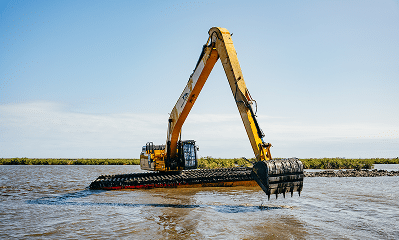
Wetland construction presents unique challenges for engineers. Soft soil, waterlogged terrain, and sensitive ecosystems require specialized equipment to ensure efficiency and safety. Traditional cranes often cannot operate effectively in marshes and swamps. This is where amphibious cranes come into play. Designed to maneuver on water and soft ground, these cranes offer unmatched capabilities for wetland construction projects. In this blog, we explore the types, capabilities, and advantages of amphibious cranes and guide engineers on choosing the right equipment.
What is an Amphibious Crane?
An amphibious crane is a specialized crane designed to operate in wetlands, marshes, and other soft terrain where standard cranes would struggle. Unlike conventional cranes, amphibious cranes feature a floating or tracked base that distributes weight evenly. This design prevents the crane from sinking into muddy soil and allows it to navigate shallow water bodies safely.
These cranes are also referred to as marsh cranes or swamp cranes. They are ideal for applications such as dredging, bridge construction, and vegetation management in wetlands. Amphibious cranes provide engineers with a reliable solution for lifting heavy loads, excavating soil, and transporting materials in areas that are otherwise inaccessible.
Key Features of Amphibious Cranes
- Pontoon or floating base that allows operation on water and soft terrain
- Wide tracks or double pontoons for weight distribution
- Multi-functional attachments such as clamshell buckets and dredging tools
- Extended boom reach for efficient lifting over water and mud
These features make amphibious cranes an indispensable part of wetland construction equipment. They reduce environmental impact, maintain operational stability, and provide engineers with versatility in complex environments.
Types of Amphibious Cranes
Amphibious cranes come in several types, each suited for specific wetland construction tasks. Understanding the differences helps engineers select the right crane for their projects.
Pontoon-Based Amphibious Cranes
Pontoon-based amphibious cranes have a floating platform that allows them to operate in deep wetlands or shallow water areas. The pontoon structure distributes the crane’s weight evenly and prevents it from sinking. These cranes are commonly used for dredging rivers, installing bridge supports, and lifting heavy materials in waterlogged environments.
The key advantage of pontoon-based cranes is their ability to maintain stability on water. Their wide base also allows them to carry heavier loads than smaller tracked cranes. Engineers looking for reliable performance in deep wetland areas often choose pontoon-based amphibious cranes.
Track-Based Amphibious Cranes
Track-based amphibious cranes use wide tracks or double-track systems to move over soft terrain such as mud, sand, or marsh soil. These cranes excel in areas with fluctuating water levels, providing traction that keeps the crane stable during operation.
Track-based cranes are highly maneuverable and ideal for projects where the ground is uneven or water coverage varies. They are commonly used for lifting materials, clearing vegetation, and performing maintenance tasks in wetlands. By distributing weight across a larger surface area, they minimize the risk of sinking.
Floating Crane Excavators
Floating crane excavators combine the features of a crane and an excavator on a floating platform. This type of amphibious crane is designed to dredge, excavate, and lift heavy materials from waterlogged or marshy areas. Floating crane excavators are highly versatile, capable of handling multiple tasks without the need for additional equipment.
These cranes are especially useful for engineers managing wetland restoration, pond construction, or drainage projects. Their ability to operate directly from water surfaces saves time and reduces environmental disruption.
Capabilities of Amphibious Cranes in Wetlands
Amphibious cranes are equipped with features that make them highly effective for wetland construction. Their capabilities include load handling, maneuverability, and multi-functional attachments.
Load Capacity and Reach
Amphibious cranes are designed to lift heavy loads efficiently. Depending on the model, these cranes can handle several tons of material, including construction components, dredged soil, and vegetation. The boom length varies, allowing cranes to reach over water, mud, and other obstacles. This makes them ideal for bridge construction, shoreline work, and material handling in wetland environments.
Maneuverability in Soft Terrain
Wetlands are challenging for standard construction equipment due to soft soil and water coverage. Amphibious cranes solve this problem with wide tracks or floating pontoons that distribute weight evenly. They can move safely across marshes, swamps, and shallow rivers without causing ground damage or sinking. Engineers benefit from stable operation and precise positioning of materials even in difficult terrain.
Multi-Functional Attachments
Modern amphibious cranes support a variety of attachments to enhance productivity. These include:
- Clamshell buckets for soil excavation
- Dredging tools for removing sediment
- Pile drivers for bridge or dock construction
Multi-functional attachments allow engineers to use a single crane for multiple tasks, reducing the need for additional equipment and minimizing project costs. Using wetland crane equipment efficiently improves project timelines and ensures safety in sensitive environments.
Advantages Over Traditional Cranes
Amphibious cranes offer several advantages over standard land-based cranes, particularly in wetland construction projects.
- Environmental Benefits: They reduce soil disruption and prevent damage to wetland ecosystems. Floating pontoons or tracks spread weight evenly, minimizing ground impact.
- Safety in Unstable Terrain: Standard cranes risk tipping or sinking on marshy soil. Amphibious cranes provide a stable base for lifting and moving materials.
- Efficiency and Cost-Effectiveness: By enabling access to areas that conventional cranes cannot reach, amphibious cranes reduce the need for temporary platforms or heavy transport. Their multi-functional capability also reduces equipment costs.
Engineers looking to improve project efficiency and safety will find Wilco Marsh Buggies amphibious cranes to be the most practical solution for wetland construction.
Choosing the Right Amphibious Crane
Selecting the right crane requires consideration of several factors. Engineers must evaluate project requirements and site conditions before making a decision.
Factors to Consider
- Type of Wetland: Marshes, swamps, and riverine wetlands each have different soil and water characteristics.
- Load Requirements: Consider the maximum lifting weight and boom reach needed for construction tasks.
- Water Depth and Soil Consistency: Deep water or very soft soil may require a pontoon-based crane, while shallower or uneven terrain may be suitable for track-based cranes.
Operational and Maintenance Tips
- Routine Maintenance: Regular inspection of pontoons, tracks, and hydraulic systems ensures reliable operation.
- Corrosion Protection: Cranes operating in waterlogged areas require protective coatings and regular cleaning.
- Operator Training: Skilled operators are essential for safe handling in challenging wetland environments. Proper training reduces accidents and improves project efficiency.
Conclusion
Amphibious cranes are essential equipment for wetland construction projects. They combine stability, maneuverability, and versatility, making them ideal for marshes, swamps, and other soft terrains. Whether you need a pontoon-based crane, track-based crane, or floating crane excavator, these cranes offer unmatched capabilities for engineers handling wetland projects.
Choosing the right amphibious crane ensures project efficiency, safety, and minimal environmental impact. Evaluate your wetland construction requirements and select a crane that meets your load, terrain, and operational needs.
Ready to upgrade your wetland construction equipment? Explore our amphibious crane models today and enhance project efficiency and safety. Contact us now for more details.
FAQs About Amphibious Cranes
1. What is the difference between a marsh crane and a swamp crane?
A marsh crane and a swamp crane are types of amphibious cranes designed for soft terrain. Marsh cranes are often used in shallow wetlands, while swamp cranes handle deeper water and softer soils. Both are engineered for stability and maneuverability in challenging environments.
2. Can amphibious cranes lift the same load as traditional cranes?
Yes, amphibious cranes can handle heavy loads, but their capacity depends on the model. Pontoon-based cranes usually carry larger weights than smaller track-based cranes.
3. Are amphibious cranes environmentally friendly?
Yes. Their wide tracks or floating pontoons distribute weight evenly, reducing ground impact and preventing damage to wetland ecosystems. They allow construction with minimal environmental disruption.
4. What types of attachments are available for amphibious cranes?
Amphibious cranes support clamshell buckets, dredging tools, pile drivers, and other attachments, making them versatile for excavation, dredging, and lifting tasks.
5. Do amphibious cranes require special operator training?
Yes. Operators must understand crane handling in wet and unstable terrain to ensure safety and efficiency.