

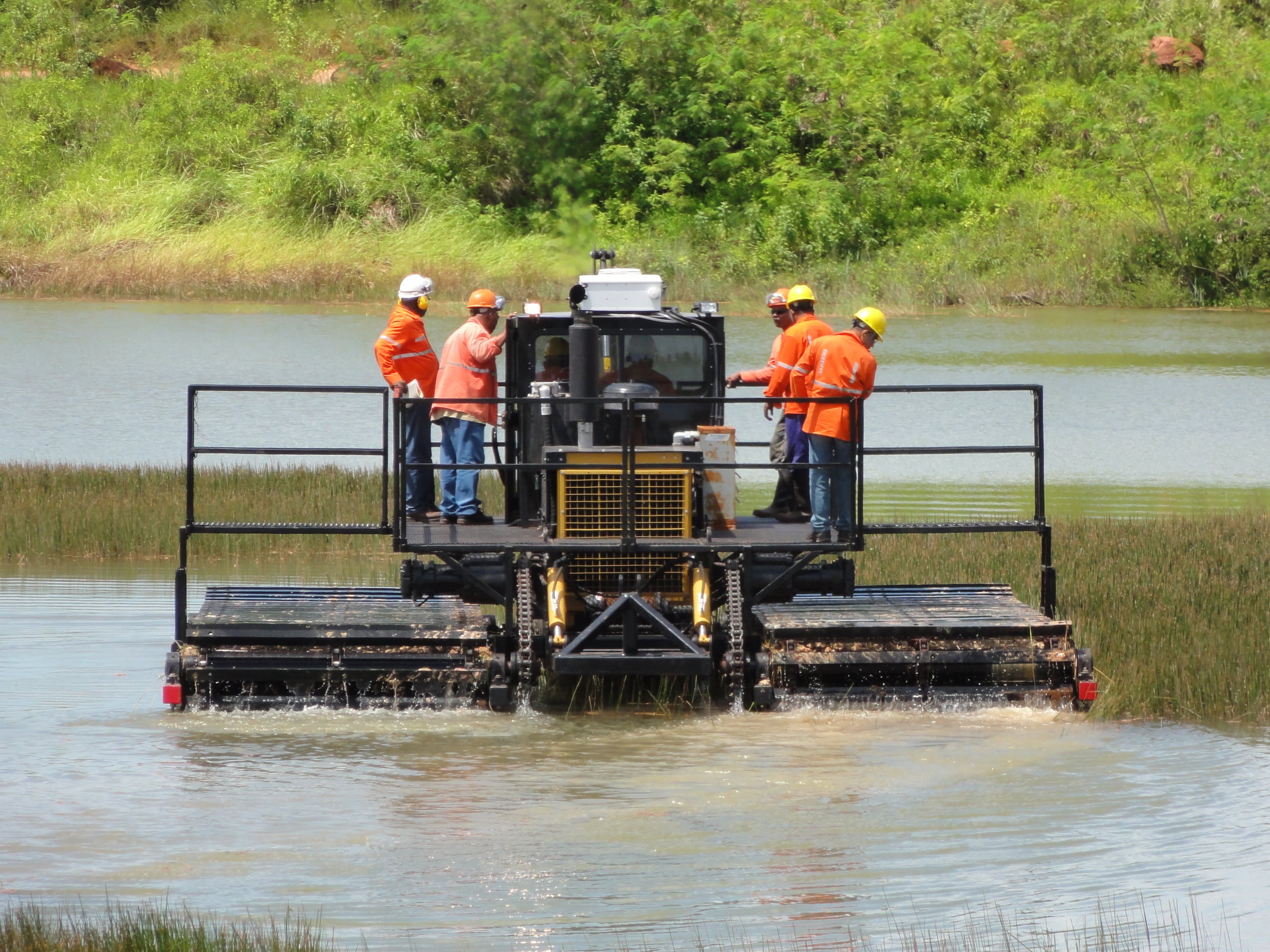
Dredging looks simple on paper: remove sediment from a channel, pond, canal or marsh and place it somewhere else. In practice, the work often takes place on soft ground and shallow water where conventional machines cannot operate safely. The benefits of amphibious excavators in dredging projects come from solving that exact problem. These machines float, walk on soft soil and work in places that standard equipment cannot reach.
This guide explains how amphibious excavator dredging works, why it suits difficult sites, and what project planners should consider when selecting amphibious dredging equipment. It also covers common applications, safety practices and answers to frequent questions.
What Is an Amphibious Excavator?
An amphibious excavator is an excavator mounted on a floating undercarriage. Instead of standard steel tracks, the machine sits on pontoons or wide, buoyant track assemblies. These allow it to move across mud, shallow water, standing water and saturated ground while keeping the excavator arm available for digging, loading and placement work.
Most designs share a few core features:
-
Pontoons or sealed floats that provide buoyancy
-
Wide track systems that spread machine weight over a large surface area
-
A hydraulic excavator arm, often available in long-reach configurations
-
Attachment options such as buckets, grapples, cutters and dredge pumps
Machines in this category are often called marsh excavators, pontoon excavators or marsh buggies. Each name points to the same underlying idea: equipment built for soft terrain. If you are new to the terminology, this explanation of what a marsh buggy is and when a project needs one gives useful background before you compare machine types.
Why Dredging Sites Are Hard to Work On
Dredging sites share conditions that make ordinary earthmoving difficult. Banks are unstable. Water depth changes with tides, rainfall and seasonal flow. Sediment can be deep and loose, and access roads are often absent or unsuitable for heavy trucks.
Conventional excavators have high ground pressure, which means they concentrate weight on a small footprint. On soft ground they sink, and recovering a stuck machine costs time and can damage the site. Contractors often respond with timber mats or temporary access roads, but these add cost, extend schedules and disturb more habitat than the dredging itself.
Another common option is a barge-mounted excavator. Barges work in sufficiently deep water, yet they struggle in shallows, narrow channels and marsh edges. The gap between solid ground and navigable water is where amphibious equipment fits.
Key Benefits of Amphibious Excavator Dredging
Low Ground Pressure and Flotation
The defining advantage is how the machine distributes its weight. A wide, buoyant undercarriage spreads load across a large area, so the excavator stays on top of soft sediment instead of sinking into it. When water is deep enough, the machine floats and works from the surface. This is the main reason an amphibious excavator for dredging can start work in places where a standard excavator would not even be unloaded.
Access to Remote and Shallow Areas
Many dredging jobs sit in the transition zone between land and water. Examples include canal banks, drainage ditches, retention ponds, marsh channels and the edges of lakes and rivers. An amphibious machine can travel across mud flats, shallow water and firm ground in a single mobilization, which removes the need to switch equipment as site conditions change.
Reduced Environmental Impact
Low ground pressure also protects the site. Because the machine does not rut or compact soil the way a heavy tracked excavator does, vegetation and root systems are more likely to recover. In wetlands, where permits often include strict limits on disturbance, this matters. Working directly from the water or marsh surface can reduce or eliminate the need for access roads and temporary mats, which lowers the overall footprint of the project.
Fewer Support Requirements
Because the machine travels across land and water on its own, projects can avoid some of the logistics that come with other methods. There may be less need to build access routes, bring in separate floating platforms or move equipment repeatedly between staging areas. Many amphibious designs can also be separated into sections for transport and reassembled at the site, which helps with remote locations that trucks cannot reach directly.
Versatility Through Attachments
Amphibious excavators are not limited to a single digging bucket. Depending on the configuration, they can carry:
-
Standard and ditching buckets for sediment removal
-
Long-reach booms for working farther from the machine
-
Excavator-mounted dredge pumps for hydraulic dredging
-
Grapples and cutters for clearing vegetation and debris
This flexibility lets one machine handle several stages of a project, such as clearing growth, removing sediment and shaping banks.
Amphibious Dredging Equipment Compared With Other Methods
Choosing equipment depends on site conditions, project goals and environmental requirements. The table below summarizes how amphibious dredging equipment from Wilco Marsh Buggies compares with other common approaches.
| Factor | Conventional Excavator on Mats | Barge-Mounted Excavator | Amphibious Excavator |
|---|---|---|---|
| Soft ground performance | Limited, depends on mat setup | Not suited to land | Strong, low ground pressure |
| Shallow water work | Poor | Limited by barge draft | Strong |
| Deep water work | Not suitable | Strong | Limited by float depth and arm reach |
| Site preparation | High, mats or roads required | Moderate, launch point needed | Low |
| Ground disturbance | Higher | Low on land, variable at banks | Lower |
| Transition between land and water | Difficult | Difficult | Designed for it |
| Best use | Firm banks and dry areas | Open water channels | Marshes, shallows, ponds and canals |
The comparison shows that no single option wins in every condition. Barges remain the better choice for deep, open water, and conventional machines still make sense on firm ground. Amphibious equipment performs best where land, mud and shallow water overlap, which describes a large share of real dredging sites.
Where Amphibious Excavators Are Used in Dredging
Amphibious excavators appear across several types of dredging and related work:
-
Canal and ditch maintenance: Removing accumulated silt and vegetation from drainage channels
-
Pond and lake dredging: Restoring depth in stormwater ponds, recreational lakes and retention basins
-
Wetland restoration: Moving sediment to rebuild marsh elevation or reshape channels
-
Shoreline and erosion control: Reshaping banks and placing material where it stabilizes the edge
-
Pipeline and utility corridors: Maintaining access and clearing channels in wet terrain
The same machines also support construction in soft ground. For example, pipeline construction in swamp and marsh areas often relies on amphibious equipment to reach right-of-way sections that wheeled or standard tracked machines cannot cross. Dredging teams face a similar access problem and often use the same class of equipment.
What to Consider When Selecting Amphibious Dredging Equipment
Equipment selection affects productivity, safety and cost. A few questions help narrow the options.
Site Conditions
Start with the basics: water depth, sediment type, bank stability and the distance from the nearest road. Deep, soupy sediment calls for a machine with greater flotation, while a firmer marsh may allow a smaller unit. Seasonal changes in water level can also shift which equipment is practical, so it helps to review the site in more than one condition if possible.
Reach, Attachments and Dredging Method
Consider how far the machine must reach from its working position. Long-reach arms allow work across wider channels without repositioning. If the project uses hydraulic dredging, check that the excavator can support a dredge pump and that the hydraulic capacity matches the attachment. Mechanical dredging with a bucket requires a different setup and a plan for placing or transporting the removed material.
Transport and Mobilization
Ask how the machine will reach the site. Units that can be disassembled into smaller sections are easier to move into remote areas. Confirm the weight and dimensions of each section against trailer, road and access limits before scheduling delivery.
Customization and Support
Soft terrain projects rarely look the same twice. A manufacturer or rental provider that can adjust pontoon size, boom length or attachments to fit the job often saves time compared with modifying a standard machine in the field. Operator guidance, maintenance advice and parts availability also deserve attention, especially for projects far from service locations.
Safety and Operating Practices
Working on floating equipment adds considerations that land-based crews do not face. Good practice usually includes:
-
Reviewing the manufacturer’s stability and load chart before lifting or swinging heavy material
-
Checking pontoons, seals and hydraulic systems before each shift
-
Keeping operators trained in working on water and soft ground
-
Marking hazards such as submerged debris, utilities and drop-offs
-
Having a recovery and rescue plan before work begins
Environmental compliance is part of safe operation as well. Permits for dredging often specify where sediment can be placed, how turbidity is managed and when work can take place. Checking local requirements before mobilizing helps prevent delays.
Amphibious Equipment From Wilco Marsh Buggies
Wilco Marsh Buggies is a Louisiana company that builds soft terrain, amphibious machines and offers them through sales, rentals and leasing. Its range includes amphibious excavators, pontoon excavators, long-reach models, cargo carriers, marsh cranes and digger derricks. The company also designs equipment to fit specific project requirements, which is useful when standard dimensions or reach do not match a site.
For dredging work, the practical value lies in matching the machine to conditions. A project team that shares water depth, sediment type, access limits and the dredging method can get a clearer picture of which configuration is likely to perform well. Wilco Marsh Buggies also publishes educational material on marsh equipment, including a guide explaining why contractors choose marsh buggies for wetland access, which covers many of the same planning questions raised here.
Conclusion
The benefits of amphibious excavators in dredging projects come down to access, stability and reduced site disturbance. Floating undercarriages and low ground pressure let operators work in marshes, shallows and soft ground where conventional equipment either cannot operate or requires costly site preparation. Combined with long-reach options and attachments such as dredge pumps, amphibious dredging equipment can support a wide range of tasks, from canal maintenance to wetland restoration.
Selecting the right machine still depends on site conditions, project goals and permit requirements. If you are planning a dredging job in soft or flooded terrain and want to discuss equipment options, contact our team at Wilco Marsh Buggies to talk through your site and project needs.
Frequently Asked Questions
1. What is amphibious excavator dredging?
Amphibious excavator dredging is the removal of sediment, debris or vegetation from waterways and wetlands using an excavator mounted on a floating or low ground pressure undercarriage. The machine can work from mud, shallow water or the water surface, depending on site conditions.
2. Can an amphibious excavator work in deep water?
Amphibious excavators float, but they are designed for shallow water, marshes and soft ground rather than deep open water. Their working depth depends on the pontoon design, machine weight and arm reach. For deep channels, barge-mounted or hydraulic dredges are usually more suitable.
3. What types of dredging projects use amphibious dredging equipment?
Common examples include canal and ditch cleaning, pond and lake dredging, wetland restoration, shoreline stabilization and maintenance along pipelines and utility corridors. Any project with soft ground and limited access is a candidate.
4. Is amphibious dredging better for the environment?
It can be. Low ground pressure reduces rutting and soil compaction, and working directly from the site often removes the need for temporary roads or mats. The actual impact still depends on the dredging method, sediment handling and compliance with local permits.
5. Should I rent or buy an amphibious excavator for dredging?
Renting suits short projects or one-time jobs, while buying makes sense for contractors with regular soft terrain work. Leasing offers a middle option. The right choice depends on how often the equipment will be used, project length and maintenance capacity.
6. What attachments are available for an amphibious excavator for dredging?
Typical options include standard and ditching buckets, long-reach booms, grapples, cutters and excavator-mounted dredge pumps. Available attachments vary by model, so confirm compatibility and hydraulic requirements before selecting a configuration.