

Amphibious Excavator for Environmental Restoration
Specialized Environmental Restoration Solutions from Wilco Marsh Buggies
An amphibious excavator for environmental restoration gives project teams a practical way to reach these challenging areas while performing the excavation and material-handling work required for restoration. With specialized flotation systems and low-ground-pressure designs, these machines can operate across soft terrain and shallow water where standard excavators may struggle. Wilco Marsh Buggies provides specialized amphibious equipment for demanding wetland and environmental projects across the United States.
Our Services

Contracting


Leasing

Flexible Rental Terms
Key Features of Our Environmental Restoration Equipment
A successful restoration project needs more than equipment that can simply travel through mud. The machine must also provide the reach, excavation capability, attachment compatibility, and stability needed to perform specific restoration activities.
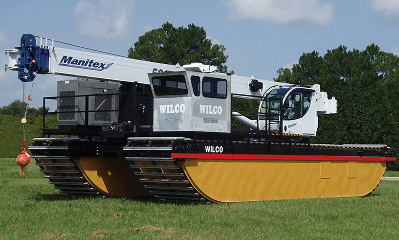
Wetland and Marsh Access
Many restoration sites include saturated soil, shallow water, mud flats, marsh vegetation, and isolated work areas. An amphibious undercarriage allows the machine to travel across these conditions and reach areas that may be difficult to access with conventional excavators.
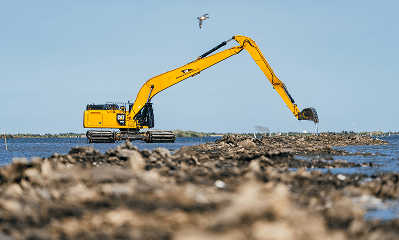
Sediment Removal Capability
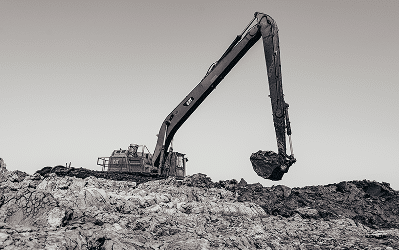
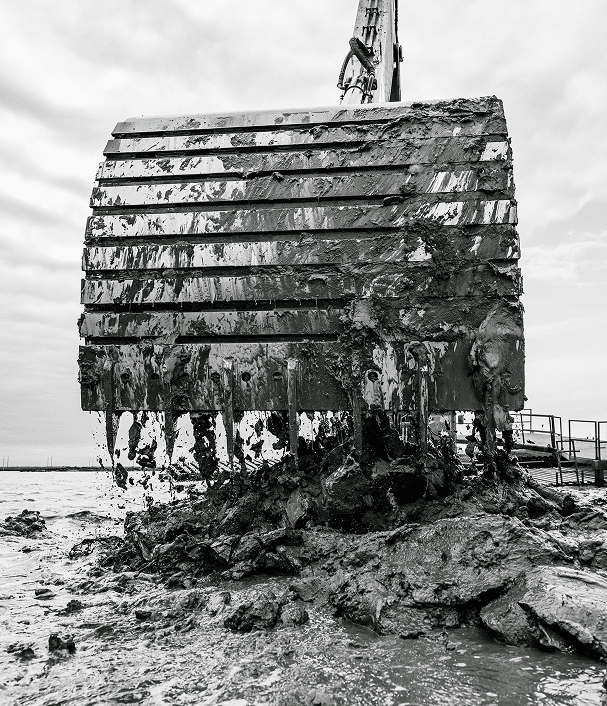
With an appropriate bucket or dredging configuration, an amphibious excavator environmental restoration setup can support sediment excavation in shallow and waterlogged areas. This gives contractors a practical way to reach material that conventional excavation equipment may not be able to access efficiently.
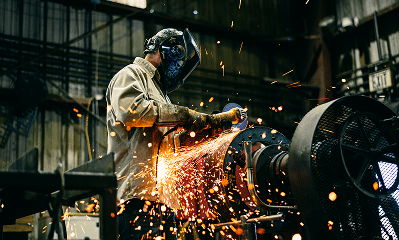
Vegetation Management
Specialized attachments can allow amphibious machinery to support vegetation removal and land management activities. This makes the marsh buggy environmental restoration approach useful for projects where vegetation control forms part of the restoration plan.
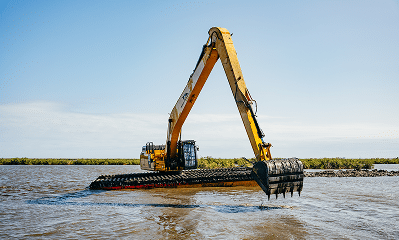
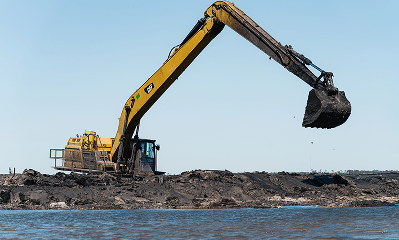
Long-Reach Excavation
Some restoration work requires operators to reach material from a stable machine position rather than moving directly over every section of the site. Long-reach configurations can help crews work across channels, wet areas, and sections of soft ground that are difficult to approach directly.
Attachment Versatility
The ability to configure amphibious machinery around the required task gives contractors greater flexibility. This makes amphibious equipment environmental restoration applications suitable for projects that involve several different physical restoration activities.

Custom Equipment Configurations
No two restoration sites have exactly the same conditions. Water depth, soil consistency, required reach, vegetation density, access points, and project scope can all influence equipment selection.
Custom equipment configurations can address these differences through changes to boom arrangements, attachments, flotation systems, and other components. The goal is to match the machine to the restoration work rather than forcing the project to fit a standard equipment setup.
How Amphibious Equipment Helps with Environmental Restoration
The role of amphibious equipment in environmental restoration goes beyond getting a machine onto soft ground. The equipment can help contractors carry out specific physical interventions that support broader restoration goals.

Rebuild Degraded Wetland Areas
An amphibious excavator for environmental restoration provides a way to perform this work directly within difficult wetland environments. Contractors can use the machine to support excavation, clearing, grading, and other site preparation tasks.

Restore Water Flow and Channels
Healthy wetland systems depend on appropriate water movement. Blocked or altered channels can contribute to standing water, sediment buildup, or changes in habitat conditions. Restoration crews may need to clear channels, remove accumulated material, or reshape selected areas to improve site conditions. An amphibious machine can access shallow waterways and soft ground while performing the excavation required for these projects.

Address Erosion Problems
Erosion can gradually alter shorelines, marsh edges, channels, and floodplain areas. Restoration work may include moving material, reshaping affected sections, or supporting stabilization measures. An amphibious excavator environmental restoration project can use specialized equipment to reach erosion-prone locations without depending entirely on firm access roads. The machine can support the excavation and material-handling portion of broader erosion control work.

Improve Habitat Conditions
Habitat restoration often requires physical changes to the site before ecological improvements can take place. Crews may remove invasive vegetation, clear excess sediment, reshape areas, or prepare locations for habitat features. A marsh buggy environmental restoration solution can provide access to these areas and support the physical work required to prepare or rebuild habitat.

Work in Sensitive Locations
Environmental restoration projects often take place in locations where access must be carefully planned. Bringing conventional heavy equipment through a wetland can require additional access preparation, temporary routes, or ground protection measures. Amphibious machinery offers another approach by allowing equipment to travel across soft and wet terrain. This can help contractors plan restoration work around the actual characteristics of the site rather than first creating extensive access for conventional machinery.
Our Process
Every environmental restoration project begins with a different set of conditions. The right equipment depends on what needs to be restored, where the work will occur, and what tasks the contractor must complete.
Define the Restoration Objective
Start by identifying what the project needs to accomplish. This may include habitat rebuilding, sediment removal, invasive vegetation management, erosion control, channel work, shoreline restoration, or a combination of several tasks.
Review the Work Area
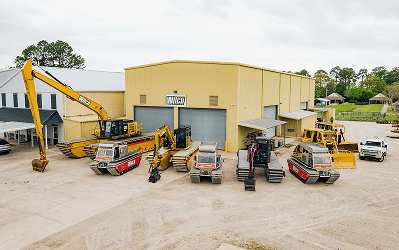
Evaluate the terrain and access conditions. Consider soft soil, standing water, channels, vegetation, working depth, available access points, and areas that conventional equipment cannot safely reach.
Match Equipment to the Restoration Tasks
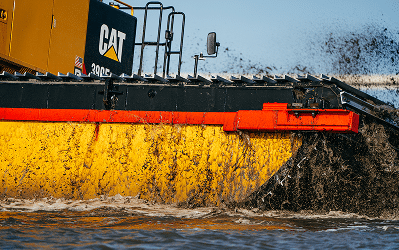
Select the appropriate amphibious excavator, marsh buggy, boom configuration, and attachments based on the work required. A sediment removal project may need a different setup from a vegetation management or shoreline restoration project.
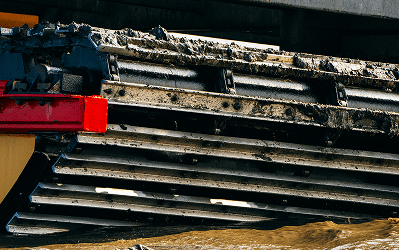
Choose Rental, Leasing, or Purchase
Determine how the equipment will fit the project timeline. Contractors can consider rental, leasing, or purchase options based on project duration and expected equipment use. Flexible rental and leasing options are available for environmental restoration and other wetland applications.
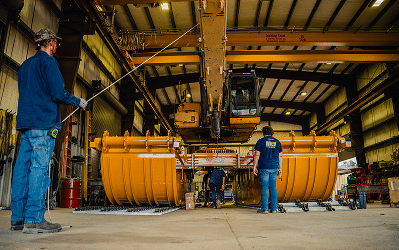
Plan Mobilization and Site Access
Coordinate equipment delivery and determine how the machine will enter the work area. Proper planning helps crews account for site conditions before restoration activities begin.
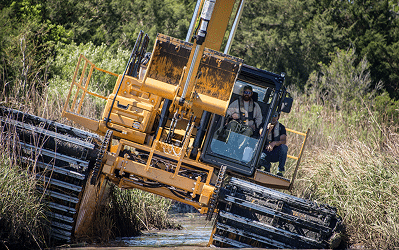
Complete the Restoration Work
Deploy the equipment for the planned restoration activities. Depending on the project, the machine may support sediment excavation, vegetation removal, channel work, erosion control, material placement, or habitat preparation.
A project-specific equipment plan helps contractors approach restoration work with the right combination of mobility, reach, attachments, and field support.
Why Choose Wilco Marsh Buggies?
Environmental restoration projects demand equipment that can handle conditions well outside the capabilities of ordinary construction machinery. We specialize in amphibious equipment for wetlands, marshes, swamps, and other soft-terrain environments.
- Environmental Restoration Experience: The equipment supports applications including habitat rebuilding, sediment removal, erosion control, vegetation management, and wetland restoration.
- Equipment for Difficult Terrain: Amphibious machines provide access across soft ground, marshes, shallow water, and other challenging environments.
- Task-Specific Configurations: Contractors can select equipment configurations and attachments based on the restoration activities they need to perform.
- Flexible Equipment Options: Rental, leasing, and other equipment access options can accommodate different project durations and operational requirements.
- Experienced Amphibious Equipment Provider: We provide decades of experience in designing, supplying, and supporting machinery for demanding soft-terrain applications.
Environmental restoration requires more than simply reaching a wetland. Contractors need equipment that can perform the actual work required to improve the site. An amphibious excavator for environmental restoration can support sediment removal, vegetation management, erosion control, channel work, habitat preparation, and other physical restoration activities.
Frequently Asked Questions
What environmental restoration tasks can an amphibious excavator perform?
An amphibious excavator environmental restoration setup can support sediment removal, shallow-water excavation, vegetation clearing, channel work, erosion control, material handling, shoreline work, and habitat preparation, depending on the selected machine and attachments.
Can a marsh buggy be used for wetland restoration?
Yes. A marsh buggy environmental restoration setup can help contractors access saturated ground and marsh areas while performing excavation, vegetation management, sediment removal, and other physical restoration tasks.
How does amphibious equipment support habitat restoration?
Habitat restoration may require crews to remove sediment, clear invasive vegetation, reshape selected areas, or prepare locations for habitat improvements. Amphibious equipment provides access to difficult terrain so crews can perform these physical tasks.
Can amphibious excavators remove sediment from wetlands?
Yes. With a suitable bucket or dredging attachment, amphibious excavators can support sediment removal in shallow waterways, wetlands, marshes, and other waterlogged areas.
Can amphibious equipment be used for erosion control?
Yes. Amphibious equipment environmental restoration applications can include work associated with erosion control, shoreline stabilization, and other projects where crews need excavation and material-handling capabilities in soft terrain.
Can amphibious excavators remove invasive vegetation?
Depending on the machine and attachment, amphibious excavators can support vegetation clearing and management. This can help contractors prepare areas for broader wetland rehabilitation or habitat restoration work.
Are long-reach amphibious excavators useful for environmental restoration?
Yes. Long-reach configurations can help operators reach channels, sediment deposits, shoreline areas, and other locations from a more stable machine position. This can be useful when direct access to the work area is limited.